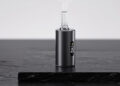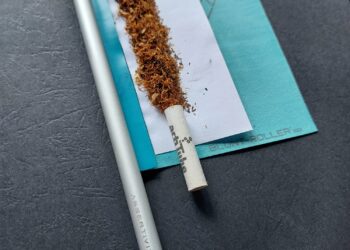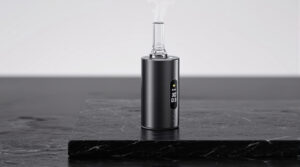
A vaporizer is an investment in cleaner, more flavorful consumption. Yet this very advantage backfires the moment resin, oils, and fine plant residue accumulate in the chamber, screens, and vapor path. Those who don’t clean their device regularly lose not only aroma but also draw resistance, efficiency, and ultimately lifespan. This guide shows step by step how to keep your vaporizer clean, which cleaning agents work best, and how often quick cleaning versus thorough cleaning makes sense.
📑 Inhaltsverzeichnis
- Why a clean vaporizer lasts longer
- These components collect the most dirt
- Quick cleaning after every session
- Thorough cleaning with isopropanol step by step
- Screen care and timely replacement
- The right cleaning schedule based on usage intensity
- Common mistakes that damage devices
- Frequently asked questions
- 💬 Fragen? Frag den Hanf-Buddy!
Why a clean vaporizer lasts longer
With every session, residue from plant material deposits inside the device. This layer of condensed oils and resins initially seems harmless, but gradually impairs function. A sticky screen narrows airflow, forcing the heating element to work against resistance and causing uneven heating of material. The result is thin vapor, a scratchy or burnt aftertaste, and electronics that age faster under constant strain.
There’s also a hygiene aspect. Old residue oxidizes, becomes rancid, and noticeably taints the flavor of every subsequent load. Anyone who has cleaned a vaporizer neglected for weeks and tried it again knows the difference. Cleaning isn’t cosmetic—it’s the simplest way to maintain performance and taste at day-one levels and avoid costly repairs.


These components collect the most dirt
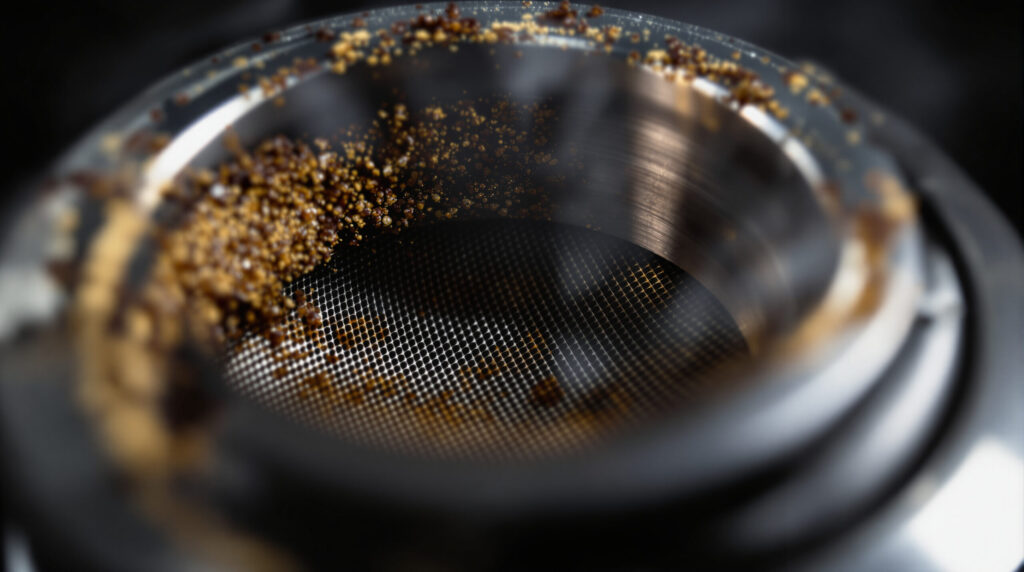
Not every component gets equally dirty. The filling chamber, where plant material is directly heated, is most affected. This is where the bulk of resins accumulate, especially in conduction devices with direct contact between material and heating element. The screen above or below the chamber catches fine particles and becomes visibly clogged over time.
The vapor path and mouthpiece form the second critical zone. As vapor travels outward and cools, some of the carried substances condense on the inner walls. Devices with water filters or cooling units have additional surfaces to consider. For an explanation of how material becomes vapor and why certain designs leave fewer residues, see our article on how a vaporizer works. Convection devices distribute heat via airflow and often soil the chamber somewhat slower than conduction models.
Quick cleaning after every session
Quick cleaning is the most important routine because it prevents stubborn layers from forming in the first place. Turn off the device after vaporizing and let it cool completely. Empty the chamber and gently tap out loose residue. Use the included brush or a dry cotton swab to sweep out the chamber and remove particles from the screen.
Wipe the mouthpiece with a dry cloth or one lightly dampened with alcohol. This takes less than two minutes and should become a fixed habit. A useful side effect is that vaped material—often called ABV for Already Been Vaped—taps out much more easily in its dry state than as sticky residue after cooling. Cleaning immediately after a session saves most of the work during thorough cleaning.
Thorough cleaning with isopropanol step by step
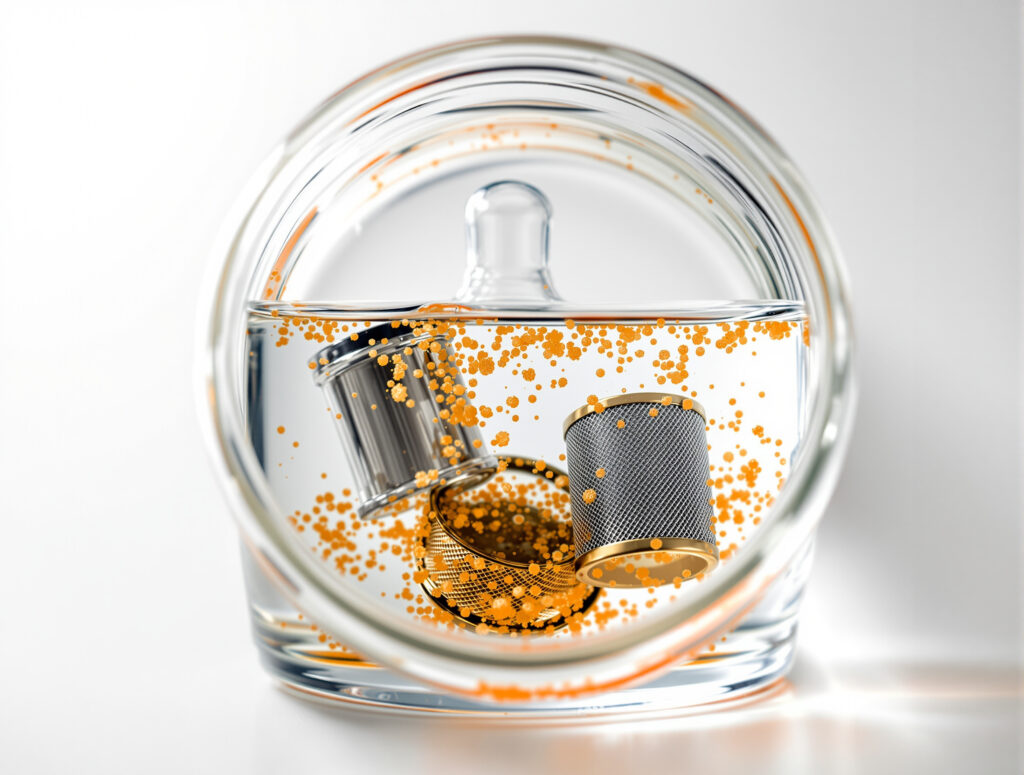
For deep cleaning, isopropanol with an alcohol content between 70 and 99 percent has become the standard. This cleaning alcohol reliably dissolves resins and oils. A 70 percent solution contains some water, which transports dissolved substances effectively, while higher-proof mixtures evaporate faster. Work in a well-ventilated space, wear gloves if possible, and keep batteries and electronic components strictly away from the liquid.
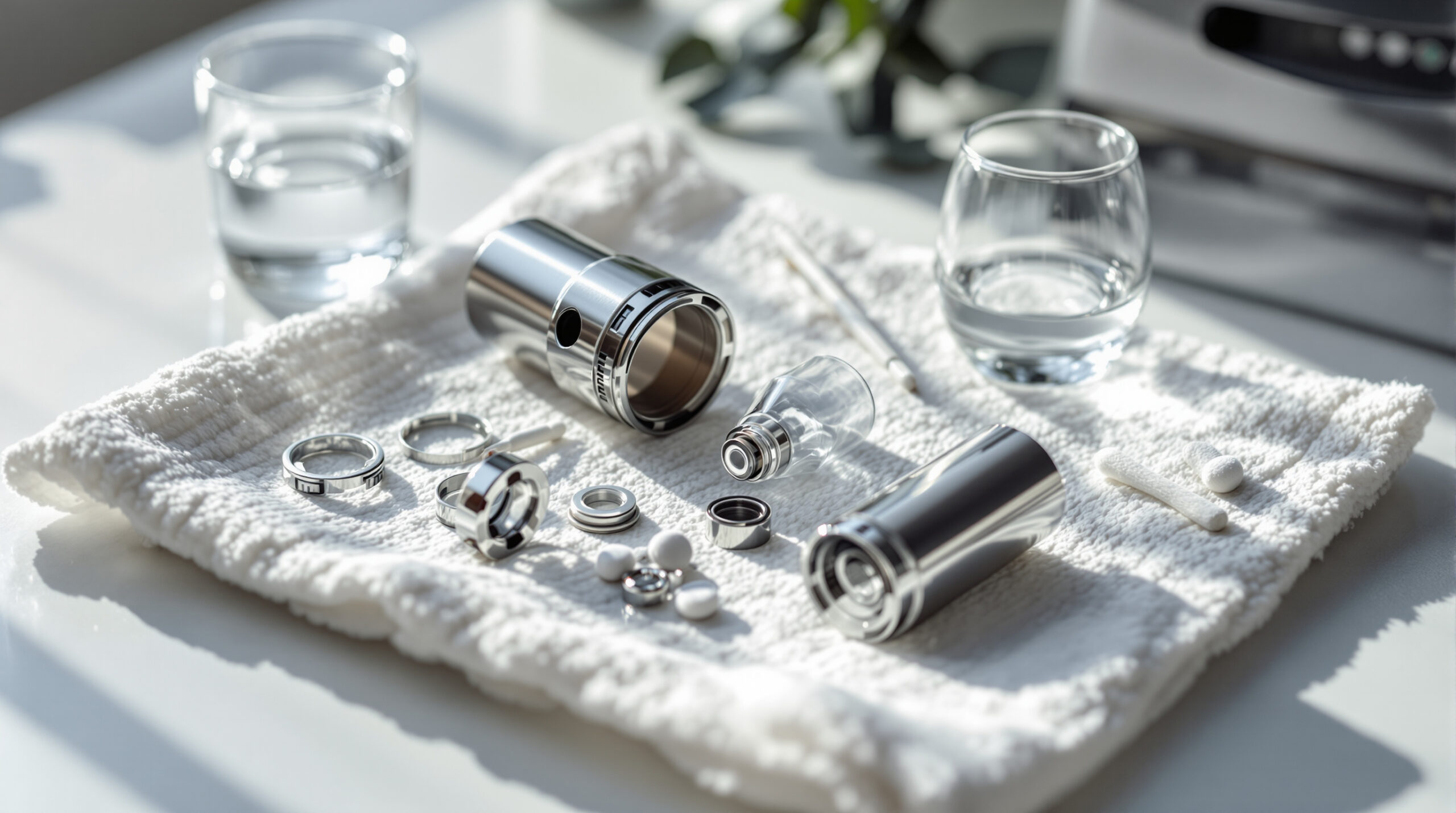
Disassemble the device into its removable parts first. Soak the mouthpiece, screens, glass pieces, and chamber—if not permanently connected to electronics—in a sealed glass container with isopropanol for approximately 30 to 60 minutes. Silicone seals and rubber rings should not go in alcohol, as they become porous and lose their sealing function. Clean these parts only with warm soapy water.
After soaking, scrub stubborn spots with a small brush or cotton swab. For a heating chamber with permanently installed electronics, don’t soak it; instead, clean with a cotton swab soaked in alcohol, letting it sit for one to two minutes if buildup is severe. Then thoroughly rinse all soaked parts under warm running water and lay them on a towel or paper towels to dry completely. Only reassemble once every part is bone dry.
Screen care and timely replacement
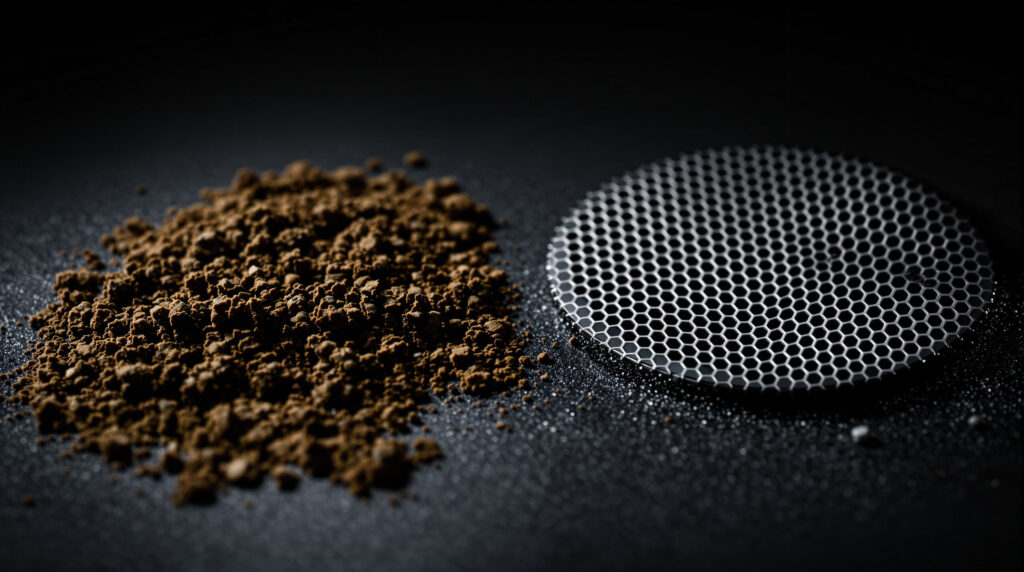
Screens are wear items deserving special attention. As long as they can be cleared again through soaking and gentle brushing, they remain usable. Once a screen becomes permanently discolored, warped, or so clogged that buildup won’t come off, replace it. A clogged screen is one of the most common causes of declining draw and weak vapor.
Replacement screens are inexpensive and available for most common models. It’s worth keeping a small supply on hand so a worn screen can be swapped immediately. When handling fine-mesh screens, be careful—they bend easily. A slightly bent screen can often be flattened back, but a cracked one cannot be saved.
The right cleaning schedule based on usage intensity
How often deep cleaning is needed depends directly on usage. Those who vaporize only once or twice weekly can get by with quick routine cleaning after each session and deep cleaning about once a month. With moderate use of three to five sessions weekly, deep cleaning every one to two weeks is recommended. Daily users should quickly wipe after each session and deep clean once weekly.
An important factor is the material used. Particularly resinous or sticky flower leaves more residue and shortens cleaning intervals. Temperature choice also matters, because higher temperatures release more substances and lead to buildup faster. For details on which temperatures release which compounds and how that affects flavor and residue, see our article on vaporizer temperature and its effects. As a rule of thumb, noticeably declining flavor is the most reliable signal that cleaning is overdue.
Common mistakes that damage devices
The most damaging mistake is liquid contacting electronics or the battery. These areas are cleaned only dry or with a lightly dampened cloth, never soaked. It’s equally risky to reassemble the device before it’s completely dry, because residual alcohol or water can evaporate from hot parts, causing unpleasant taste or component damage.
Reaching for harsh household cleaners or sharp tools also backfires. Metal tools scratch glass and damage chamber coatings, and unsuitable solvents can cloud plastics. Isopropanol, warm water, a soft brush, and cotton swabs are sufficient for nearly every cleaning job. Those who respect these simple boundaries keep their vaporizer in condition barely distinguishable from a new device for years.
Frequently asked questions
How often should I clean my vaporizer?
A quick wipe of the chamber after each session is enough. Deep cleaning with isopropanol makes sense every one to two weeks depending on usage, or once weekly with daily use. The most reliable signal is declining flavor: as soon as vapor becomes bland or scratchy, deep cleaning is due.
Which alcohol is suitable for cleaning?
Isopropanol with a concentration of 70 to 99 percent is the standard. High-proof varieties evaporate faster, while a 70 percent solution contains some water and effectively transports dissolved substances. Drinking alcohol or harsh household cleaners aren’t suitable because they leave residue or damage materials.
Can I soak all parts in isopropanol?
No. The mouthpiece, screens, glass pieces, and removable metal chambers may soak. Silicone seals and rubber rings should not go in alcohol, as they become porous. Batteries and electronics never contact liquid and are cleaned only dry or with a lightly dampened cloth.
When do I need to replace the screen?
As long as a screen can be cleared again through soaking and brushing, you can keep using it. Once it becomes permanently discolored, warped, or so clogged that buildup won’t come off, replace it. A clogged screen narrows airflow and noticeably worsens draw and vapor quality.
Does cleaning really affect flavor?
Wie oft reinigst du deinen Vaporizer gründlich?
Yes, significantly. Old residue oxidizes and becomes rancid, tainting every new load. A clean device delivers purer vapor, fuller aroma, and more consistent draw. Many users underestimate how much even a single thorough cleaning improves the flavor experience.







Branchen-Update
News, Analysen und Reportagen — mehrmals im Monat direkt in dein Postfach.
Folge uns