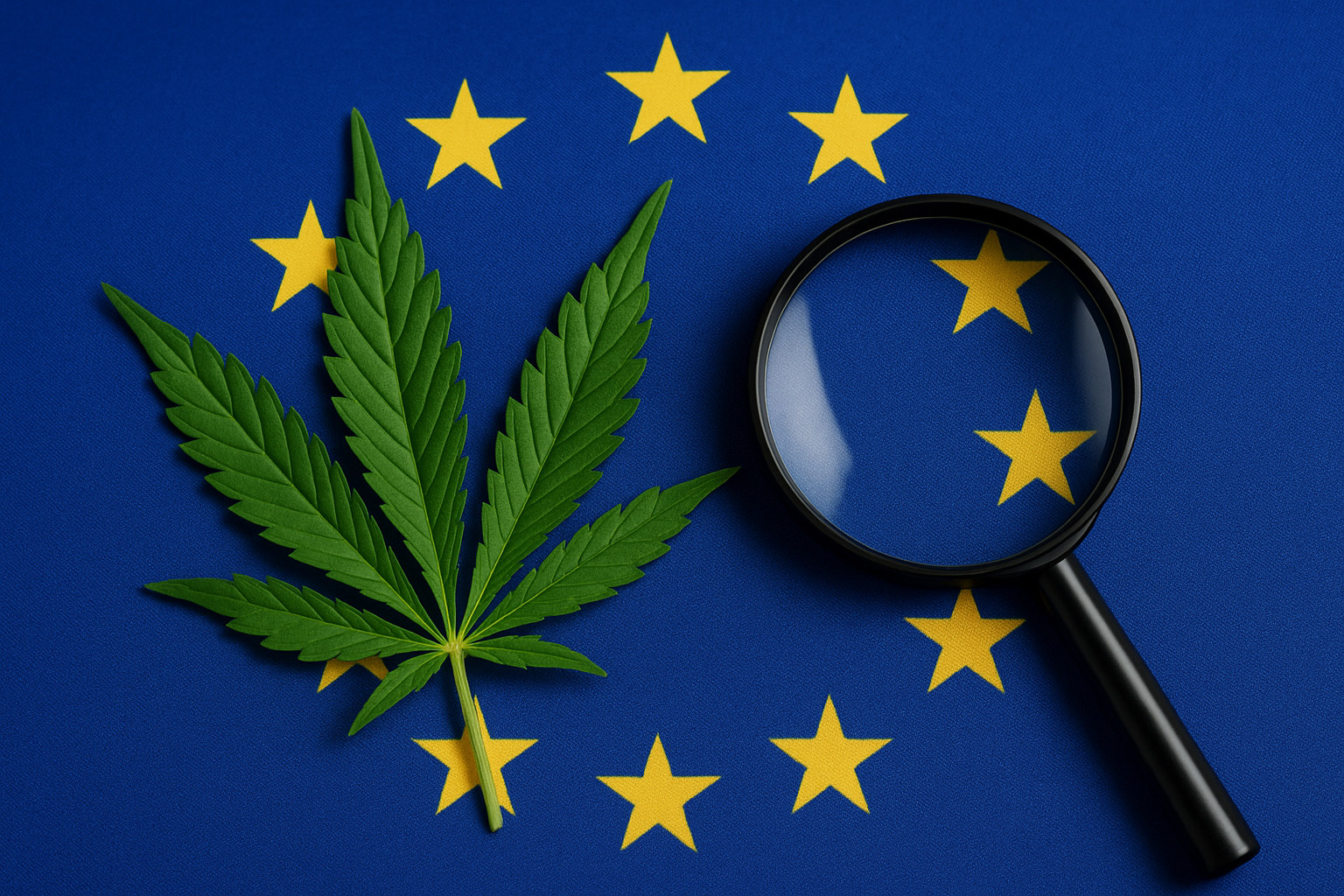
A growing market meets growing uncertainty. The European Food Safety Authority (EFSA) has sparked a debate that extends far beyond industry circles with its recent report on the safety of so-called „intoxicating hemp“ products. In recent months, products derived from hemp but containing chemically converted or isolated active compounds—including Delta-8-THC, HHC, and other novel molecules—have proliferated across several EU member states. While manufacturers celebrate these substances as a legitimate part of an innovative hemp market, authorities are warning of significant knowledge gaps.
📑 Inhaltsverzeichnis
The EFSA puts its finger squarely on a central weakness: science does not yet know precisely whether certain cannabinoid isomers occur naturally in the plant or are only created through chemical reactions during processing. Equally lacking are reliable toxicological data. How these substances act in the body, how they are metabolized, or what risks exist with regular consumption—all of this remains unclear.
A European Patchwork
The regulatory situation compounds the problem. Individual countries like Finland, Austria, and France have already imposed bans or severely restricted regulations on products like HHC. Other states tolerate them as long as they are manufactured from certified industrial hemp. Meanwhile, new markets are emerging that develop entirely outside classical cannabis policy.


This patchwork approach complicates both consumer protection and market development. The EFSA report makes clear that harmonized regulation is impossible without toxicological data. The authority therefore urgently recommends further research before political decisions are made.
Industry and Consumers Between Expectation and Reality
For the industry, the report represents a potentially significant blow to a lucrative growth sector. Many companies view „intoxicating hemp“ as an answer to strong consumer demand for legal alternatives to classic THC products. Yet concern is simultaneously growing that Europe—much like the United States years ago—is experiencing a phase of uncontrolled product diversity before clear regulations are established.
Consumers thus face a paradoxical market: on one hand, supply is expanding; on the other hand, there is scarcely reliable information about effects, dosages, or risks. Many products are marketed with natural terminology and botanical aesthetics, even though they sometimes involve complex chemical conversion processes behind the scenes.
What Must Happen Now
The EFSA has clearly thrown the ball into the political arena. The decision over whether certain cannabinoids should be permitted, banned, or regulated depends on the scientific evidence—and that evidence is thin. What is clear: Europe can no longer ignore this issue.
The key will be whether Europe can accomplish two goals simultaneously: establishing consumer protection on a solid foundation while not stifling innovation. The coming year is likely to be decisive for the future of this product category.



Branchen-Update
News, Analysen und Reportagen — mehrmals im Monat direkt in dein Postfach.
Folge uns