
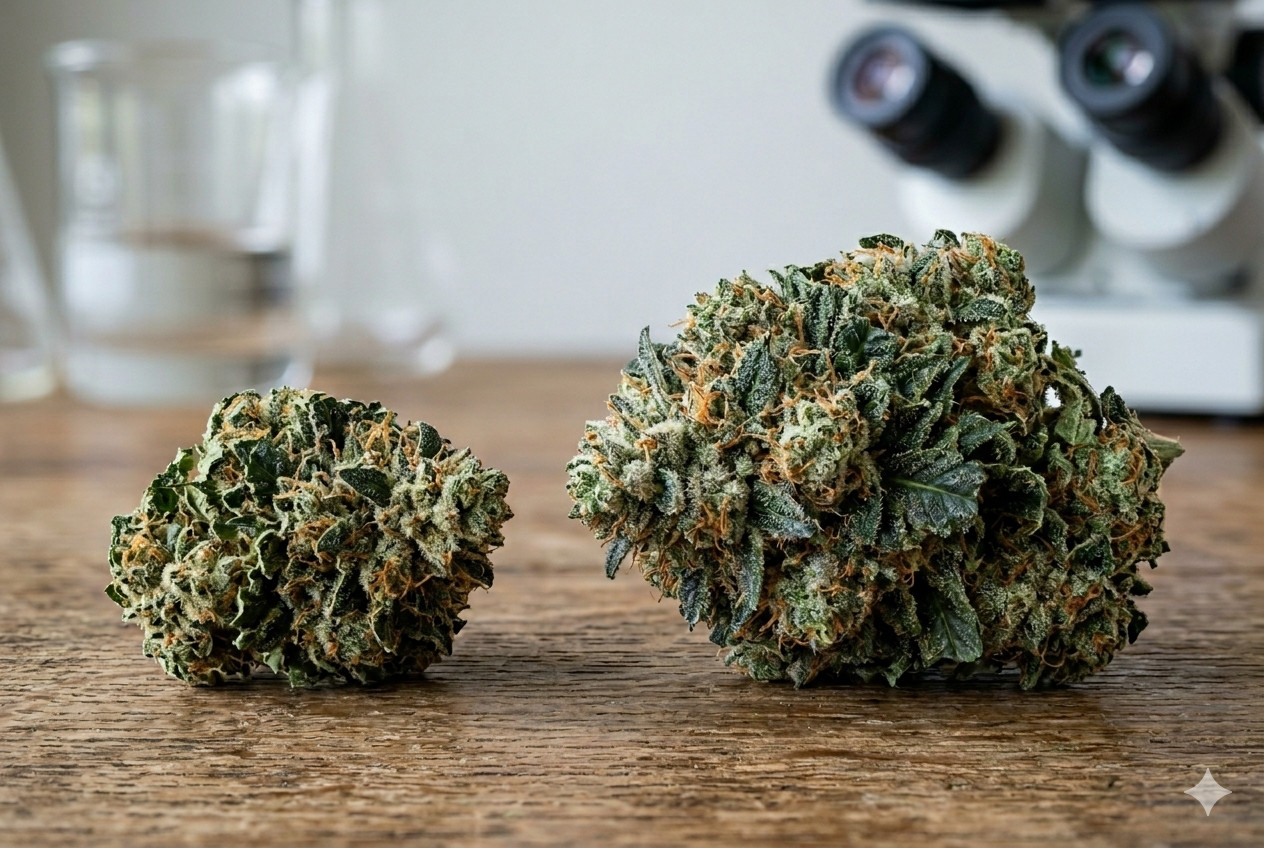
Diploids: The Standard Cannabis Genome
In nature, genetics typically follow a straightforward pattern. Like humans, most cannabis plants are diploid organisms. This means each cell contains two chromosome sets—one from each parent. In biology, chromosomes serve as storage for all DNA and enable the correct transfer of information during cell division (mitosis).
📑 Inhaltsverzeichnis
Each parent plant passes on 10 chromosomes, resulting in a total of 20 chromosomes. This diploid arrangement is an evolutionary masterstroke: it provides genetic backup. If one chromosome is damaged, the healthy copy can often mask the defect. Additionally, the combination of two parental sets provides the necessary variability to develop resistance against pests and diseases.
Although nature allows occasional variations, nearly all known cannabis strains currently on the market are diploid plants. Yet deliberately modifying this baseline opens entirely new horizons for THC content and overall yield.


Understanding Polyploidy in Cannabis Plants
Polyploidy is not an artificial phenomenon of modern times. Many of our most important crops—such as coffee, strawberries, potatoes, and oats—are naturally polyploid. In cannabis breeding, this condition is now deliberately induced, either through chemical stimulation or by skillfully crossing different ploidy levels.
Polyploid cannabis strains differ from their diploid counterparts in several key ways:
- Altered cell wall structure: Research shows that polyploidy influences the composition of cell walls. This can increase drought tolerance and strengthen defense against pathogens.
- Explosive biomass: Polyploid hemp simply produces more material. The stems are thicker, leaves are larger, and flowers are significantly heavier—a massive advantage for commercial agriculture.
- Strategic infertility: Many polyploids are sterile. What means an end in nature is a blessing for sinsemilla cultivation: it guarantees seedless weed, even if male plants nearby are shedding pollen.
Triploid Cannabis Plants
Triploid cannabis strains possess three chromosome sets (30 chromosomes total). In agriculture, we already know this principle from seedless watermelons or bananas. For cannabis cultivation, this trait is worth its weight in gold.
How Do Triploid Plants Develop?
Since triploids are extremely rare in nature, they must be deliberately bred. The path leads through crossing: a tetraploid parent (four sets) is paired with a diploid partner (two sets). The offspring inherit two sets from one parent and one from the other—the triploid plant is born.
Characteristics of Triploid Cannabis Genetics
- Larger and more voluminous: Triploids tend toward gigantic growth. An extensive root system supplies the plant with more nutrients, resulting in massive fan leaves and longer stems.
- Higher cannabinoid content: Chemical analyses confirm significantly higher levels of cannabinoids in triploid strains compared to diploid parent plants.
- Seedless security: Because triploid chromosome sets are odd-numbered, the reproductive process is disrupted. These plants produce virtually no seeds—the ultimate safety net for growers who fear pollination.
Tetraploid Cannabis Plants
Tetraploid organisms possess four chromosome sets. Instead of three sets, each cell contains four—two sets from each parent. In the breeding hierarchy, they often serve as a „botanical precursor,“ yet already offer impressive traits.
The Formation of Tetraploid Weed Plants
This is where science comes into play. By applying molecules such as colchicine (an extract from autumn crocus) or the less toxic oryzalin, cell division is manipulated so that the chromosome number doubles without the cell actually dividing.
Characteristics of Tetraploid Genetics
- Increased trichome density: Studies suggest that tetraploid sugar leaves produce approximately 40% more trichomes than diploid leaves. This means more resin and greater potency.
- Intensified terpene profile: More chromosomes mean greater capacity for terpene production. Plants smell more intensely and exhibit more complex flavor profiles.
- Higher yield: Tetraploids deliver more biomass overall. This includes both dried buds and trim material, making them particularly attractive for extract production.
Genetics Check: Polyploidy
| Type | Triploid (3n) / Tetraploid (4n) |
| Chromosome Sets | 30 or 40 chromosomes (standard: 20) |
| Primary Benefits | Larger buds, massively increased biomass, higher resin content |
| Potency Potential | Significantly higher THC & terpene levels possible |
| Special Feature (3n) | Nearly sterile plants (seedless harvest guaranteed) |
| Special Feature (4n) | ~40% higher trichome density on sugar leaves |
| Breeding Goal | Maximum efficiency, potency, and consistency in large-scale cultivation |
Cannabis Polyploids: A Fascinating and Valuable Phenomenon
We stand at the beginning of a new era in cannabis breeding. What began with simple autoflowers now leads us into the depths of cellular genetics. Polyploid cannabis plants—whether triploid for absolute pollination safety or tetraploid for maximum resin production—will fundamentally shake up the industry.
Larger buds, more THC, and unprecedented aroma are arguments that cannot be ignored. While research is still in its early stages, one thing is certain: polyploid cannabis will be one of the top topics for professional breeders and passionate growers alike in the coming years.






Hast du schon von polyploiden Cannabissorten gehört?
Branchen-Update
News, Analysen und Reportagen — mehrmals im Monat direkt in dein Postfach.
Folge uns