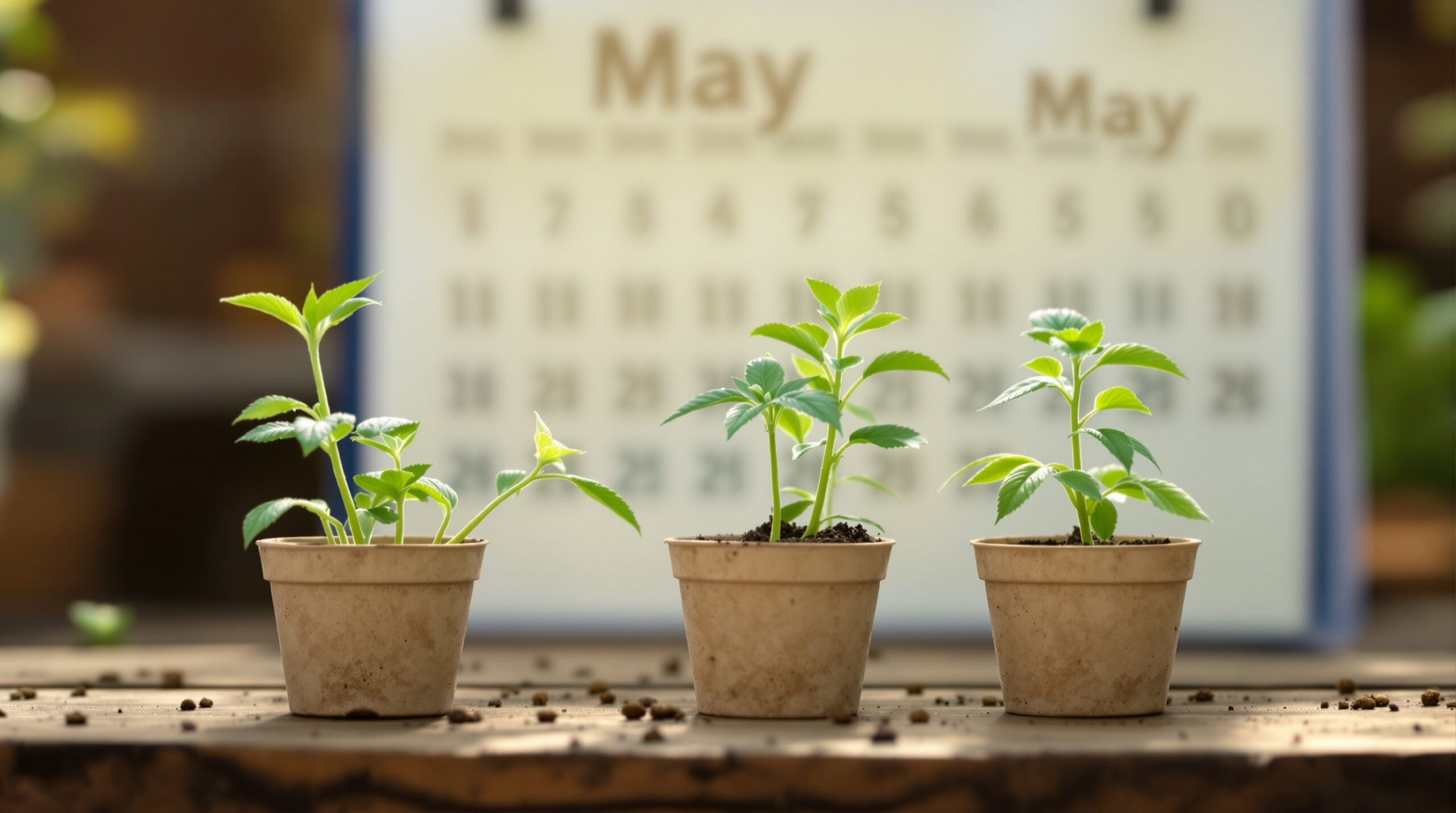
Hardly any farmers‘ rule has stuck in the minds of gardeners and growers quite like that of the Ice Saints. Anyone growing cannabis outdoors hears the phrase sooner or later from more experienced cultivators: nothing goes into the bed before Cold Sophie. Behind this seemingly dusty piece of folk wisdom lies more substance than one might initially suspect. For most regions of Central Europe, mid-May actually marks the statistical threshold beyond which night frost becomes unlikely. And young cannabis plants react to a single frost night more sensitively than almost any other crop plant in the garden.
📑 Inhaltsverzeichnis
- What the Ice Saints are and when they fall in 2026
- Why frost destroys young cannabis plants
- Climate change: How reliable is the old rule still?
- Making mid-May practical: hardening off instead of just waiting
- Region, variety, and weather: no rigid rule
- Frequently asked questions
- 💬 Fragen? Frag den Hanf-Buddy!
This article puts the Ice Saints into perspective for outdoor growing. It explains where the dates come from, what frost does physiologically to a hemp plant, why climate change is shaking up the old rule, and how to make practical use of the days around May 15th instead of just waiting them out.
What the Ice Saints are and when they fall in 2026
The Ice Saints are a series of commemorative days named after Catholic saints and have been regarded in popular tradition for centuries as the last frost period of spring. In 2026, they fall on Monday, May 11th (Mamertus), Tuesday, May 12th (Pancras), Wednesday, May 13th (Servatius), Thursday, May 14th (Boniface), and Friday, May 15th (Cold Sophie). Cold Sophie traditionally marks the conclusion, and this is precisely the day the most well-known rule refers to: never plant before Cold Sophie.


Regional variation is important. In northern Germany, usually only the first three days from May 11th to 13th count, because polar cold air reaches the north earlier. In the south and southeast, by contrast, Boniface on the 14th and Cold Sophie on the 15th are considered particularly critical, while Mamertus on the 11th is often not counted at all. For growers, this means: if you’re growing in the Alpine regions, the Bavarian Forest, or at higher elevations, you should use the later end of the period as your benchmark and, if in doubt, wait until the end of May.
The dates themselves are not a meteorological law of nature, but an observation gathered over generations. They arose long before reliable weather forecasts and condense the experience that after a mild-beginning April phase, mid-May can still see one last tongue of cold air sweep over Central Europe. These brief frost nights often caught farmers and gardeners unprepared, hence the urgent warnings in the traditional sayings.
Why frost destroys young cannabis plants
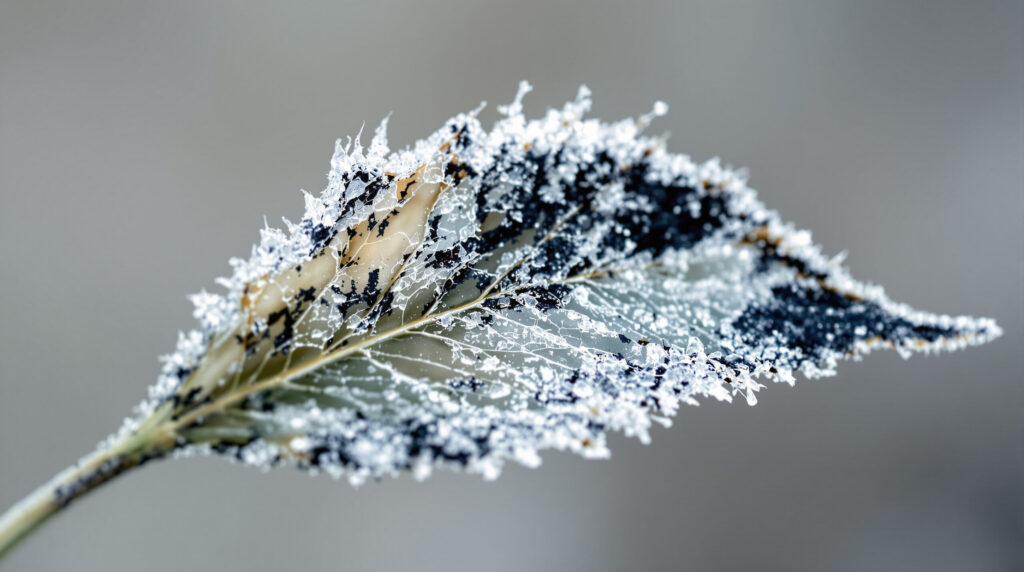
Cannabis is a heat-loving annual plant that must complete its entire life cycle within one growing season in temperate latitudes. Young seedlings have not yet developed mature cold resistance. When temperature drops below freezing, the water in the tissue freezes. The resulting ice crystals burst cell walls from the inside, and the damage at that point is irreversible. Additionally, ice formation between cells deprives surrounding tissue of water, because the concentration of dissolved substances increases and neighboring cells dehydrate via osmosis.
The consequences often only become visible hours later. Affected leaves become glassy, then collapse limply and turn brown to black. In a vigorous young plant, sometimes the root crown survives, but aboveground growth is severely set back, and in the short Central European season, lost time is hardly recoverable. If frost hits the sensitive growing point at the shoot tip, the plant is lost in many cases.
Danger comes not only from hard frost. Even temperatures in single digits above freezing over several nights slow metabolism, impede root growth, and make the plant more susceptible to fungal diseases. A single clear, windless night with ground frost can be particularly treacherous after a warm day, because heat radiates away unimpeded. This constellation occurs again and again in the second week of May, and this is precisely what the Ice Saints warn against.
Climate change: How reliable is the old rule still?
As physiologically plausible as the Ice Saints are, climate change has shifted their hit rate. For two decades, meteorologists have pointed out that the last cold air incursions tend to occur earlier in spring and the actual frost risk has shifted forward into April. May has reached higher average temperatures, so the classic mid-May frost gap has statistically become rarer.
In numbers: genuine frost nights in mid-May now occur in many regions statistically only about once every five years. Evaluations from the German Weather Service show that the probability of a cold air incursion in the second half of May, especially in the south, is well below 50 percent. The Ice Saints have thus become calendrically less precise than they were in the time of the original farmers‘ rule.
But this does not mean the rule should be thrown overboard. Instead of relying on individual traditional dates, today’s concrete weather forecast for your own region should decide. The Ice Saints remain a useful mental anchor that reminds us that May is still not reliably frost-free. Whoever combines a modern weather forecast with this old caution makes the best decision. A residual probability of a cold night is enough to destroy an entire seedling crop, and this risk stands in no proportion to the few days one would gain by earlier transplanting.
Making mid-May practical: hardening off instead of just waiting
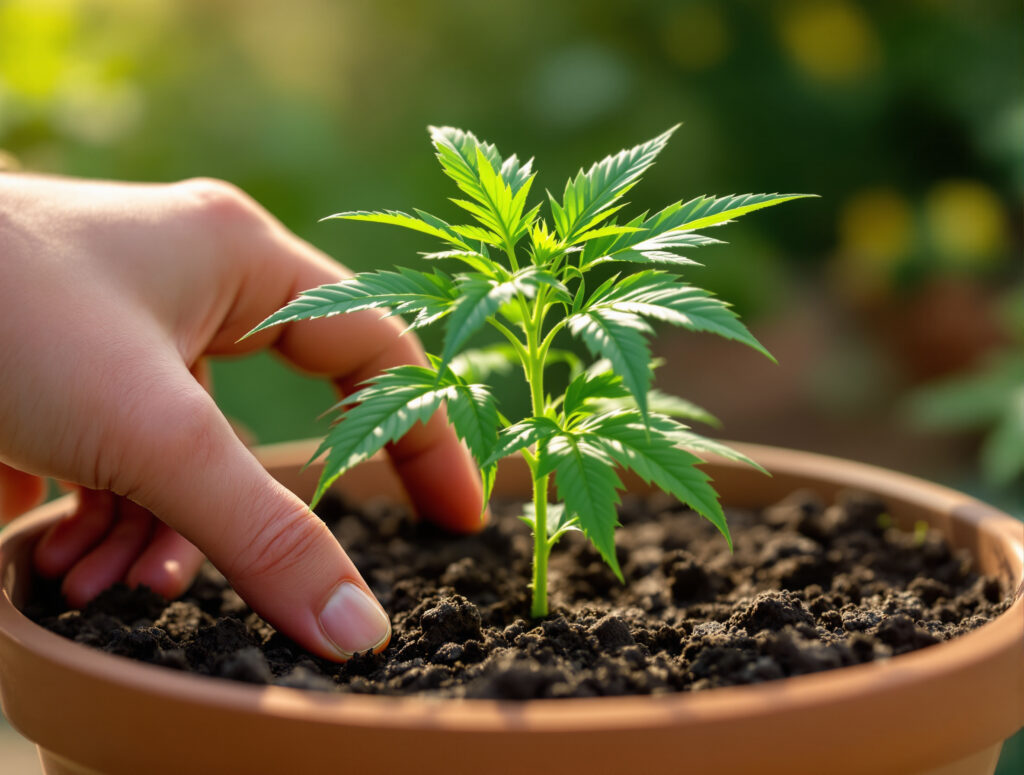
The days around the Ice Saints should not be understood as downtime, but as a transition phase. A cannabis plant that has spent its first weeks indoors or in a greenhouse is accustomed to dimmed light, constant temperature, and windless air. If you put it outside unprepared, it suffers shock from wind, UV radiation, and temperature fluctuations even without frost. That’s why hardening off is part of every successful outdoor start.
Hardening off means gradually acclimating young plants to outdoor conditions over seven to ten days. Begin with one to two hours in a protected, partially shaded spot and increase the duration daily. Over the Ice Saints period, bring the plants back inside in the evening or protect them with a fleece cloth as soon as the night threatens to turn clear and cold. This way you use the warm May days for acclimatization without taking on the frost risk of the nights.
What decides the final move into the bed is not the calendar alone, but also the plant’s condition. If it looks vigorous and robust and measures about 20 to 30 centimeters, it’s ready for outdoors. Weak or undersized seedlings are better left in protection for another week. Exactly when the season makes sense to begin also depends on variety and location. A detailed overview is provided by our article on the question of when to plant hemp outdoors.
For those wanting to be extra safe, it’s also wise to plan a contingency reserve. A garden fleece on hand, a few upturned buckets, or a provisional plastic tunnel are enough to get through a forecast frost night. With this backup, you can stick to your transplanting schedule even if the forecast turns critical for a single night. For deeper insight into timing the season start overall and avoiding mistakes, our article on when the outdoor season begins and you should set out hemp provides more detail.
Region, variety, and weather: no rigid rule
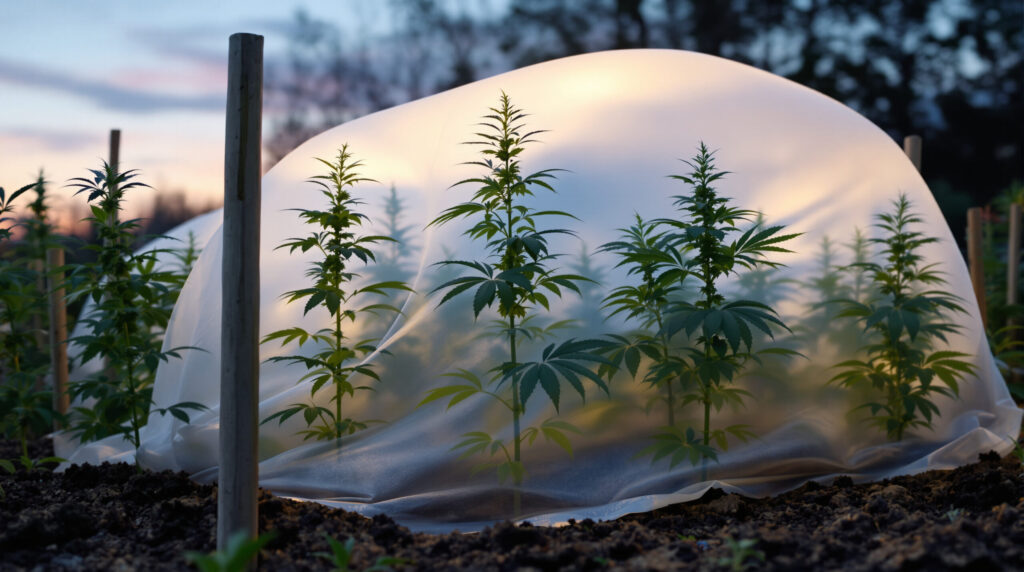
May 15th is a rule of thumb, not a fixed command. In mild wine-growing regions on the Rhine or Lake Constance, the safe date can come a few days earlier, while in elevated areas or in the continental east of Germany, real peace doesn’t settle in until the end of May. Those who know their microclimate—such as a sheltered south-facing wall or a frost-prone depression—can adjust the date accordingly.
Variety also plays a role. Robust, early-flowering genetics and many autoflowers tolerate a cool start better than pampered indoor varieties. Nevertheless, the same basic principle applies to all: frost is the one condition where there’s no second chance. Better to wait three additional days than to lose a healthy seedling crop in a single night. The Ice Saints are in this sense less a rigid date than an annual reminder not to rush the spring.
Frequently asked questions
When exactly are the Ice Saints in 2026?
The Ice Saints in 2026 fall on May 11th to 15th: Mamertus on the 11th, Pancras on the 12th, Servatius on the 13th, Boniface on the 14th, and Cold Sophie on the 15th. In the north, usually only the first three days count, while in the south Boniface and Cold Sophie are especially important.
Can I transplant cannabis before the Ice Saints?
It’s possible, but risky. Frost can still occur at night through mid-May, and even a single frost night irreversibly destroys young plants. Those transplanting earlier should have fleece or other frost protection ready and closely monitor the regional weather forecast.
Are the Ice Saints still relevant because of climate change?
The hit rate of the old rule has decreased because frost nights in mid-May have become rarer and the risk has shifted more into April. As a rough guideline, the Ice Saints remain useful, but the final decision should be based on the current weather forecast for your own region.
What does hardening off mean for cannabis seedlings?
Hardening off means gradually acclimating plants to wind, sun, and temperature fluctuations outdoors over seven to ten days. Start with a few hours in partial shade and increase duration daily. This prevents shock and prepares the plant for its permanent move into the bed.
How large should a plant be when transplanting?
Wann pflanzt du deine Cannabispflanzen draußen aus?
A healthy cannabis plant should be about 20 to 30 centimeters tall and visibly robust when moving outdoors. Undersized or weak seedlings are more susceptible to cold and wind and should be better left in protection to grow for another week.





Branchen-Update
News, Analysen und Reportagen — mehrmals im Monat direkt in dein Postfach.
Folge uns