A comprehensive botanical audit of elite strains from the Kannabia brand.
📑 Inhaltsverzeichnis
- Chronicle of 550 Seeds: The Path to Elite Phenotype
- Elite Selection: Four Profiles, Four Success Stories
- More Than Cultivation, A Legacy
- Insights from Project Leaders: The Interview
- Selection Methodology: Filtering for Absolute Elite
- Technology and Data: Measurable Quality
- The Special Mutation: The Secret of Zoap Rosé
- Genetic Response: Stability and Feedback
- Milestones: Climate Challenges
- Transparency and Community: Professionalizing the Image
- Cultivation Trends and Next Steps
- 💬 Fragen? Frag den Hanf-Buddy!
In Leipzig’s cannabis community, the cultivation association Greenkeepers Leipzig e.V. has established itself as far more than just an ordinary cannabis social club: it functions as an innovative testing laboratory where passion is measured in THC percentages and complex terpene profiles.
This project is no accident, but rather the result of close collaboration between Tobias Streng, co-founder of Greenkeepers Leipzig, and Matías Zúñiga Fernández, a passionate grower and club photographer. Under a philosophy of total transparency, their team conducted their most ambitious selection project to date.


The Pheno Hunt 2025 emerged from the necessity of finding the perfect mother plant among hundreds of possibilities. To achieve this, the club relied on the stability of Spanish cannabis genetics from Kannabia and subjected four of their flagship strains to an analysis of stress resistance, vitality, and chemical composition unprecedented in the region. Far from dry theory, this team operates through real-world practice, tackling the challenges of artisanal cannabis cultivation to deliver tangible results to their community.
Chronicle of 550 Seeds: The Path to Elite Phenotype
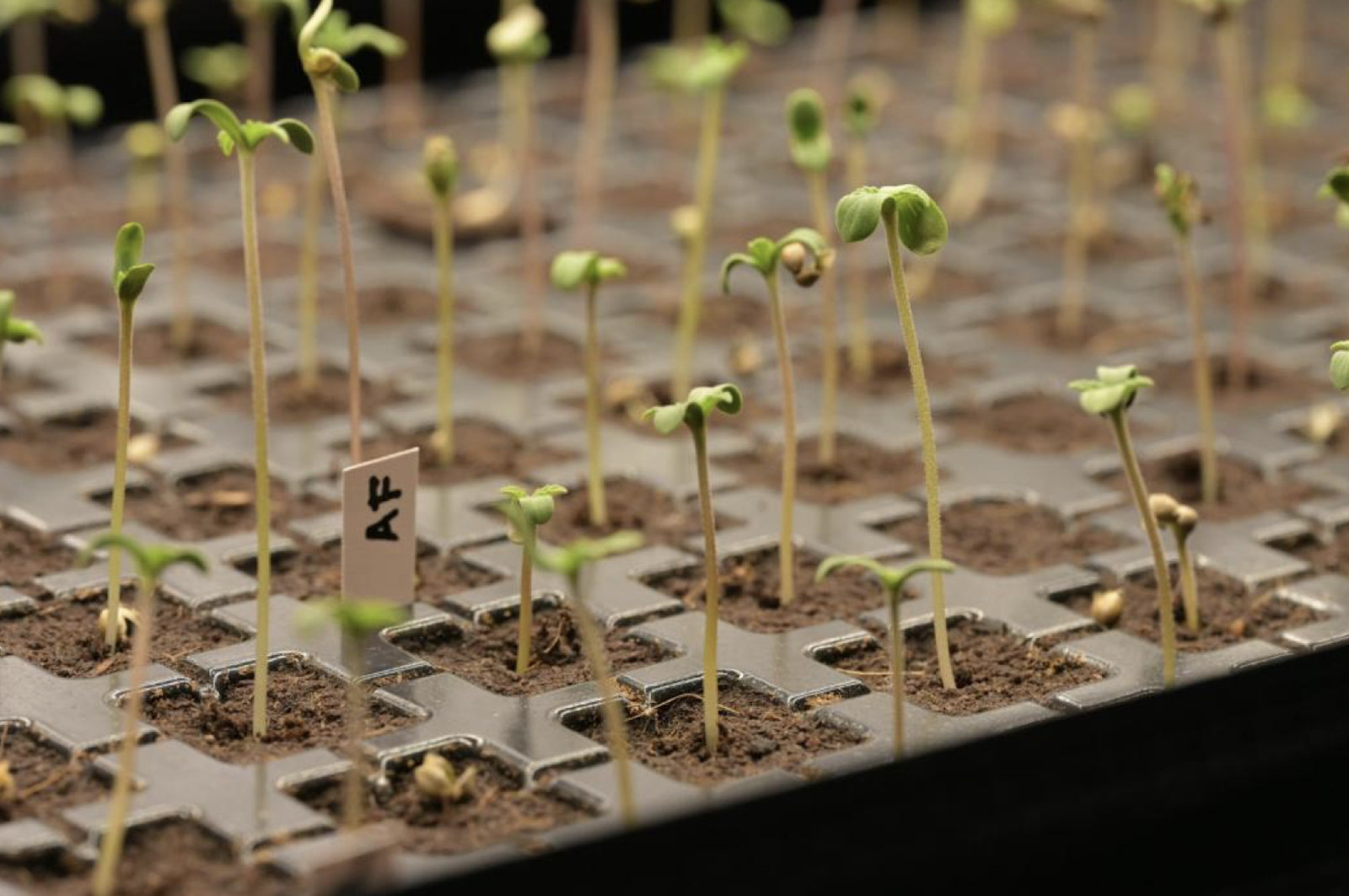
What began with the germination of nearly 550 cannabis seeds quickly became a technical journey meticulously documented week after week. Greenkeepers‘ goal was not merely cultivation, but the application of new selection methods capable of identifying exceptional specimens with surgical precision. From this initial critical mass, the selection funnel proved ruthless: only 18 specimens per strain made it to the final flowering phase.
Elite Selection: Four Profiles, Four Success Stories
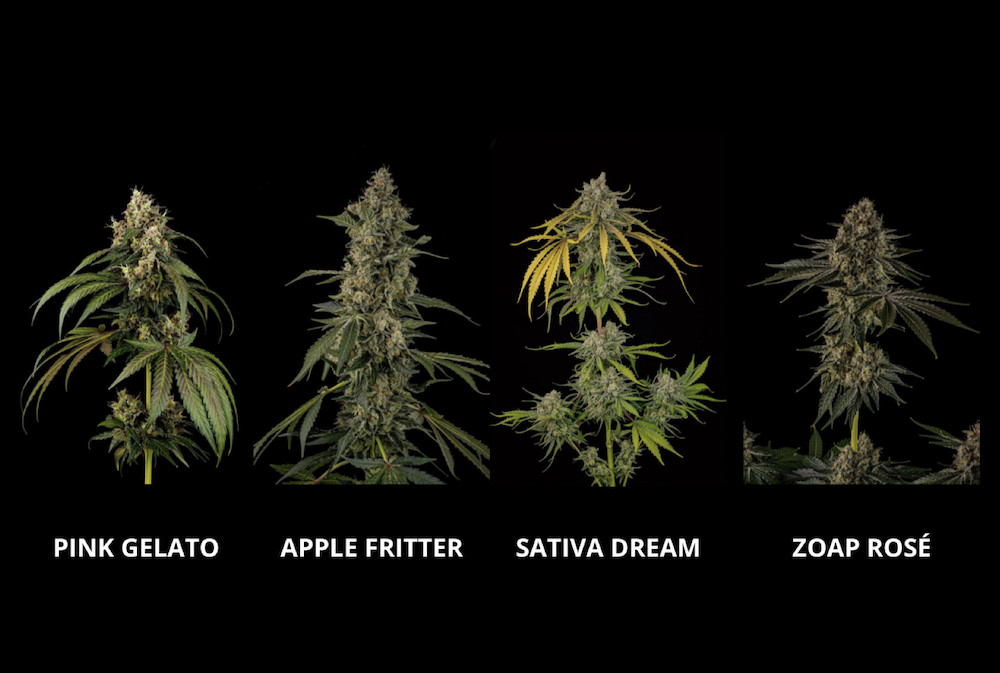
The process focused on four internationally renowned genetic lines: Sativa Dream, Pink Gelato, Apple Fritter, and Zoap Rosé.
Sativa Dream (22% THC): Energetic Elegance. After germinating more than 200 seeds, the team identified phenotypes SD2-13 and SD2-60 as the maximum expression of this line. These plants stood out through classic stretch and a fascinating aromatic transition—from fresh citrus notes to sweet, spicy Haze undertones. Their long, crystalline fox tail structures defined the visual standard of the selection.
Pink Gelato (26% THC): The Terpene Maximum. She was the sensory queen of the project. With a compact structure and extremely dense flowers, phenotypes PG35 and PG84 exceeded all expectations. Analysis with the Purpl Pro confirmed 26% THC, but it was the resin explosion and violet hues that crowned them as the jewels of cannabis desserts.
Apple Fritter (21% THC): Robustness and Pastry Notes. The most reliable strain from day one. The project placed special emphasis on biostimulated phenotypes AFB1 and AFB2, which demonstrated superior vitality. The result: dense flower clusters with a deep apple compote profile and earthy nuances—a line that combines strength with structural stability.
Zoap Rosé (25% THC): Soapy Sophistication. The most exotic variant. With symmetrical growth and an imposing presence, phenotypes ZR68 and ZR39 perfectly captured the gassy and floral essence sought by cannabis collectors.
More Than Cultivation, A Legacy
This pheno hunt represents the future of legal cannabis culture: data-driven processes, comprehensive documentation on GrowDiaries, and relentless pursuit of quality have transformed this project into a chronicle of large-scale selection. Here, premium genetics and technical transparency define the future of cultivation associations. Greenkeepers Leipzig has proven that with high-quality seed stock, the only limit is the grower’s expertise.

Insights from Project Leaders: The Interview
Selection Methodology: Filtering for Absolute Elite
Question: You reduced 550 seeds to just 18 finalists per strain. What was the most difficult exclusion criterion to maintain only absolute elite?
Answer: Our approach to this selection focused on carefully evaluating cannabis plants at every growth stage, making data-driven decisions, and being very consistent in early culling. Since simultaneous phenotype selection with 550 plants is technically barely feasible for us at present, we decided on this rigorous path after consulting with industry colleagues. The exact process is still being refined, so we don’t want to disclose all details yet. We prefer to have our colleague publish the results once they’re truly ready. What we can say is: it was a great experience that led us to some truly exceptional plants.
Technology and Data: Measurable Quality
Question: You used technologies like the Purpl Pro to measure THC values up to 26%. How important is it for you to back the grower’s intuition with scientific data?
Answer: Transparency and providing our members with a safe, high-quality product are top priorities. Tools like the Purpl Pro 2 are essential for us as a first testing phase. On one hand, it allows us to monitor variables like complete cannabinoid profiles as often as we want, providing us with the necessary data for better decisions. On the other hand, it’s incredibly useful for determining the ideal time to begin fermentation by measuring moisture and water activity. This data prevents us from processing the product too dry or too wet, leading us away from pure gut feeling toward a precise approach.
The device essentially provides hard facts to decide which plants we keep by comparing our own senses with digital sensors. For us, it’s crucial to deliver reliable results with every harvest. The Purpl Pro provides an excellent first impression; nevertheless, we send our final products to a professional laboratory to verify exact cannabinoids, terpene profiles, heavy metals, and potential mold contamination. Working with clones then guarantees consistent cannabis quality for the entire club.
The Special Mutation: The Secret of Zoap Rosé
Question: Regarding the Special Edition Zoap Rosé (ZR30)—what convinced you to keep a mutation instead of discarding it, and what can members expect from it?
Answer: Actually, this mutation was more of an interesting accident. We kept the plant until the end out of pure curiosity because of its unique appearance. However, it’s not a phenotype we could sustainably carry in our club’s selection. We observed it closely to ensure it remained healthy, but would have removed it immediately if it had weakened. Ultimately, it was a small experiment by the team for our internal checklist of rare cannabis mutations. We were already familiar with fasciation from regular garden plants, but for cannabis it was completely new to us. Honestly: next time we’d probably replace it with a normal plant. The end result simply isn’t at the level of normal growth and is neither productive nor desirable for professional operation.
Genetic Response: Stability and Feedback
Question: What feedback did you receive regarding seed stability when working with these strains under your new methods?
Answer: Our members‘ feedback has been outstanding; we see our harvests selling out impressively quickly. As growers, we’re incredibly eager to cultivate our absolute favorites in the next cycle. This time the final is between two outstanding phenotypes instead of eighteen. At this stage, yield per square meter, structure, and consistency will determine which plant takes the mother role. Currently, our members still receive a mix of all 18 finalists from the first run. The quality is already very high, but the exciting news is: the coming cycle will see a significant quality increase. Using such reliable seed stock allows us to select the best of the best instead of settling for average.
Milestones: Climate Challenges
Question: Which characteristic was hardest to find, and which of the strains exceeded your expectations under Leipzig’s conditions?
Answer: Sativa Dream captivated us from the beginning. It was really difficult to decide which plant would emerge as the winner, as many showed outstanding characteristics. SD2-60 delivered extremely dense flowers down to the lower branches, possessed a compact structure, and a wonderful sandalwood note. SD2-13, on the other hand, grew airier and had a citrus-sweet aroma reminiscent of classic Haze times. Since both tested strong at 21%, other factors had to decide. Commercially speaking, the higher-yielding phenotype wins, but the special profile of the other variety makes the choice extremely difficult. We’ll probably give both another chance or simply keep both as different options on our menu.
Transparency and Community: Professionalizing the Image
Question: You documented the entire process publicly. How does this transparency help improve the image of cultivation associations to authorities and society?
Answer: The additional effort of documentation helps enormously in breaking down the stigma of a culture that has had to exist in the shadows for far too long. If that’s our contribution to normalizing cannabis cultivation, we’re happy to make it. One must not forget that what we do here was heavily criminalized not long ago—and still is in much of the world. Even domestically, there remains strong political resistance. By proving that cannabis clubs are a serious and safe way to combat the black market, we demonstrate that we can maintain the highest standards of transparency and security.
Cultivation Trends and Next Steps
Question: In your opinion, where are cultivation techniques headed in the next two years, and what is your next major challenge?
Answer: The next steps for us are clearly perfecting our selection. We want to master our strains and blindly respond to their specific needs. Last year we tested a lot of new equipment and learned from our mistakes. Now it’s about fine-tuning. Besides maintaining our genetic database, a dedicated research and development area is essential to stay interesting long-term.
After the success of this pheno hunt, we will test the potential of our cannabis mother plants in direct comparison and firmly integrate them into our menu. We strive for absolutely consistent quality. Additionally, we’re working on technical upgrades in climate and automation. Operating a cannabis social club in Germany is conceptually brand new and there’s still much optimization potential in administrative tasks. Acquiring new members also remains a challenge, as classical advertising is prohibited. Therefore, we rely entirely on education, documentation, and the highest quality.












Branchen-Update
News, Analysen und Reportagen — mehrmals im Monat direkt in dein Postfach.
Folge uns