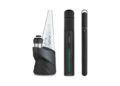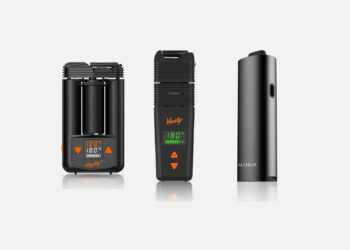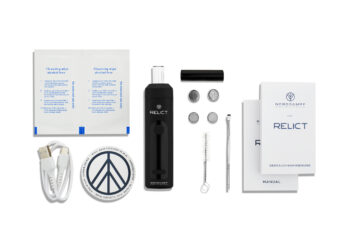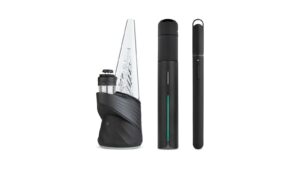
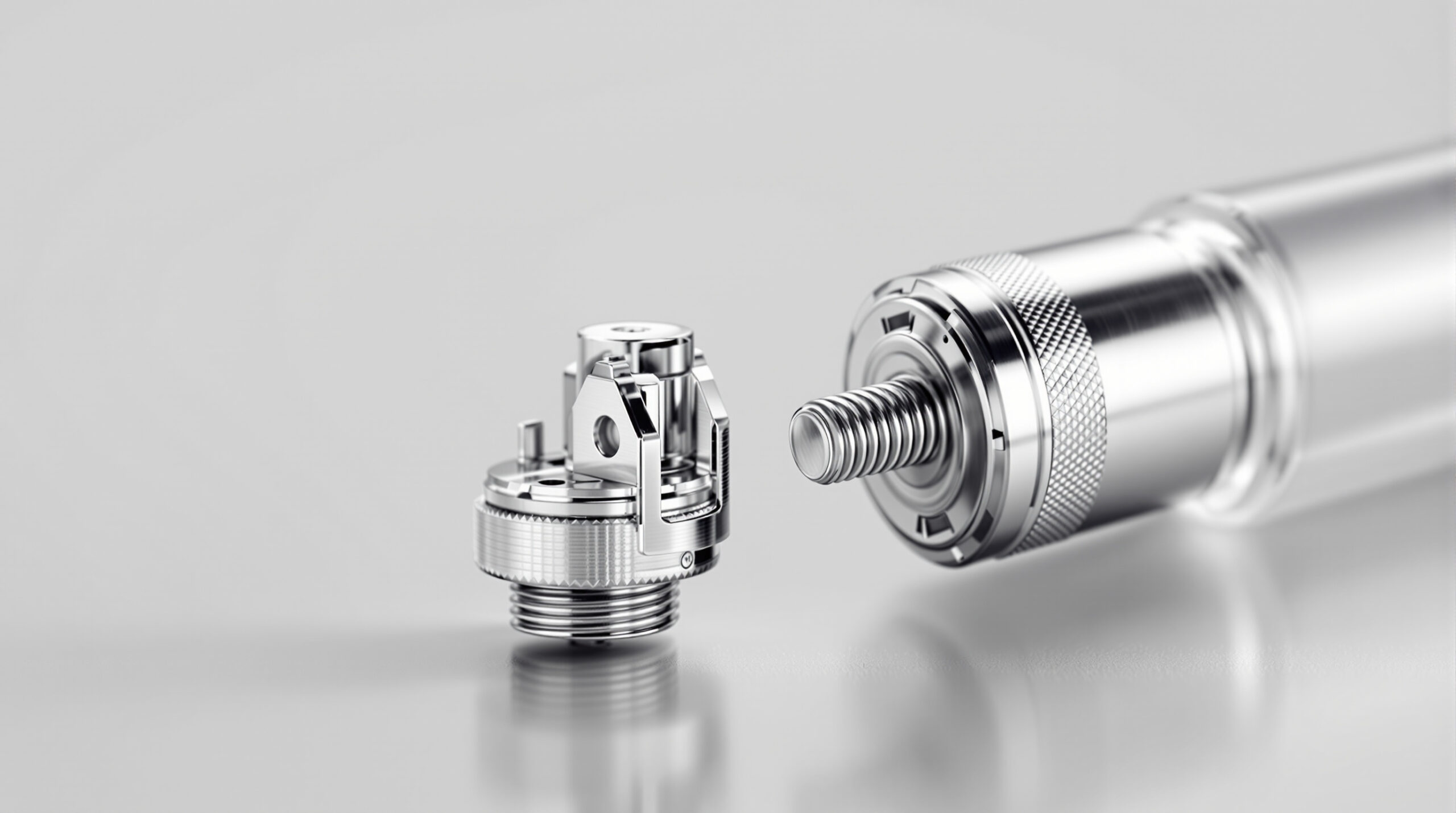
The assumption is simple: a thread fits, so the system works. That’s the logic behind the „510“ designation stamped on nearly every cartridge and battery. It’s only half right—and the other half determines whether a combination vaporizes cleanly or burns the material. Here’s what’s happening technically, why it matters for safety, and what you need to know.
📑 Inhaltsverzeichnis
What the 510 Designation Actually Means
The term traces back to the early days of vaping technology and simply describes a thread specification at the connection between battery and cartridge. The name comes from its original design: approximately five millimeters in diameter with ten thread pitches.
Here’s what matters: 510 is not a standard. There’s no standards committee behind it, no testing protocol, and no binding specification. It’s a convention that emerged over years and stuck because it was practical. Two components labeled 510 can screw together. That’s all it guarantees.


This is the critical difference between mechanical fit and system compatibility. A lightbulb fits any socket with the same base, yet voltage determines whether it illuminates or burns out.
Five Points Where Systems Fail Despite Matching Threads
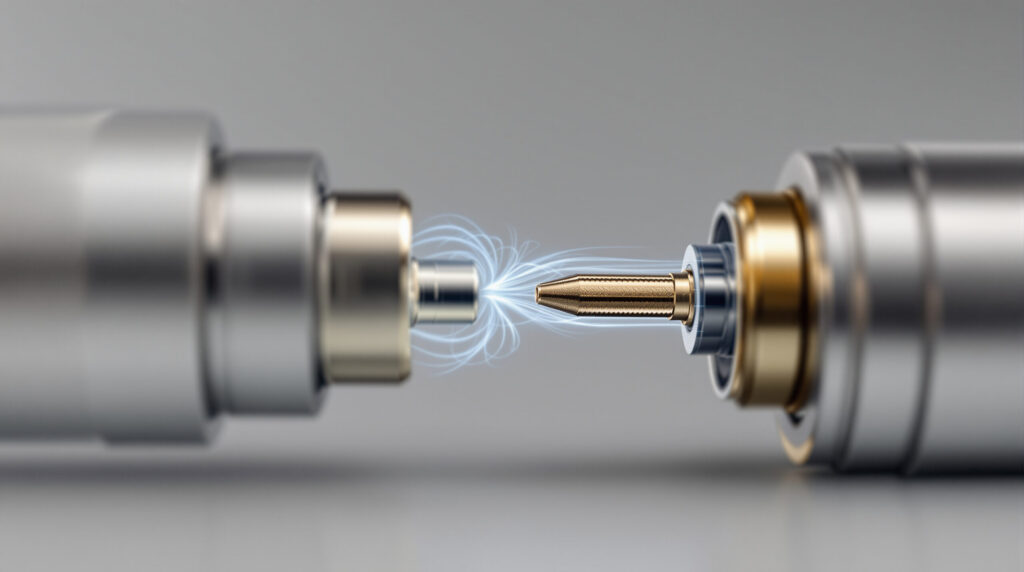
Contact alignment. Current doesn’t flow through the thread itself—it flows through a center contact, usually a spring-loaded or rigid pin. If it sits too deep, you get unreliable connection or no function at all. If it protrudes too far, screwing it down can permanently deform the mating surface. Both problems are invisible to the naked eye because the components still screw together mechanically.
Airflow path. Draw resistance depends on how the intake hole on the cartridge aligns with ventilation openings on the battery. Mismatched cross-sections create either excessive airflow or restriction so tight that the heating element gets insufficient cooling. The latter is the bigger problem, and we’ll explain why next.
Height and diameter. These don’t affect function, but they matter for real-world usability. A cartridge that’s too wide protrudes beyond the battery and becomes a breaking point in your pocket. One that’s too narrow looks visually awkward. If you’re building a system for daily use, this matters.
The tolerance stack. Every component has manufacturing tolerances. When parts come from the same production run, they usually compensate for each other. Mix components from different manufacturers, and tolerances can add up in the worst way: a thread at the upper tolerance limit meets a contact at the lower limit, and two individually flawless parts create a pairing that either binds or wobbles. This is why a combination works perfectly for one user and fails for the next.
Power range. This is where it stops being convenient and becomes serious. Every heating element is designed for a specific power range. If a battery consistently delivers more power, the material gets hotter than intended. Many batteries allow you to adjust power output, with no indication what wattage the attached cartridge was actually built to handle.
Why This Is a Safety Issue, Not a Hobby Topic
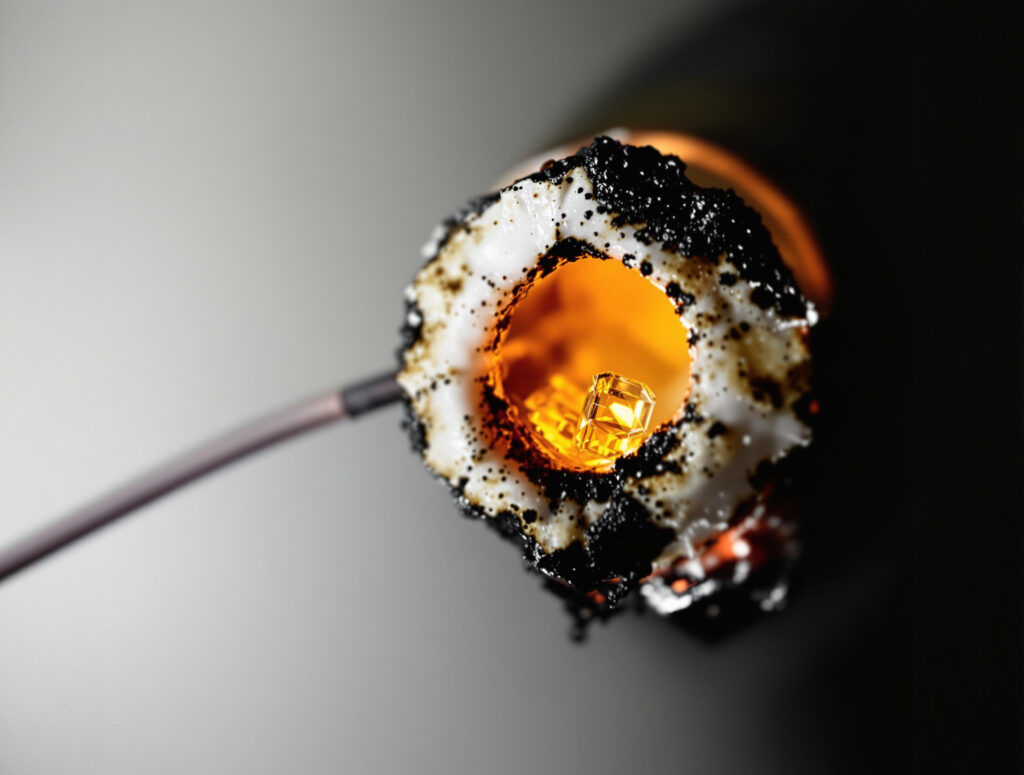
Vaporization differs from combustion in that temperature stays below the threshold where substances thermally decompose. Exactly that threshold gets crossed when too much power reaches too small a heating element, or when airflow can’t dissipate the heat. Then decomposition products form—substances that wouldn’t exist in proper use.
How serious this can become became clear in 2019 in the United States. Under the acronym EVALI, thousands of severe lung illnesses were recorded, many fatal. The prime suspect was vitamin E acetate, a cutting agent added to illegally filled cartridges. We reported at the time on the Fundación Canna investigation into vitamin E acetate.
There, the trigger was the fill, not the hardware. But both factors are interconnected: what’s in the cartridge determines what substances are present, and how hot it gets determines what they become. Ignoring the hardware means you’re only controlling half the equation.
The Legal Situation in German-Speaking Regions
Before assembling a system, take a clear look at what’s even legal to fill here. Hardware is freely available; contents usually aren’t.
- Filled THC cartridges have no legal route in Germany. The Cannabis Consumption Act allows adults to possess and home-grow within narrow limits, but there is no legal trade in pre-filled THC cartridges. Medical cannabis isn’t distributed in this form either.
- HHC and related cannabinoids have been subject to the New Psychoactive Substances Act since June 2024. Products still being offered operate outside legal boundaries.
- CBD liquids are their own product category with their own rules and shouldn’t be confused with cannabis extract cartridges.
Practically speaking: if you’re holding a filled cartridge in a German-speaking region, it almost certainly came from an unverified source. That makes composition questions more urgent than any compatibility question. For legal access, we’ve described what happens technically when vaporizing cannabis flower in our article How Does a Vaporizer Work? For legal routes using flower material, a classic dry herb vaporizer is the more appropriate device anyway.
Checklist Before Assembling
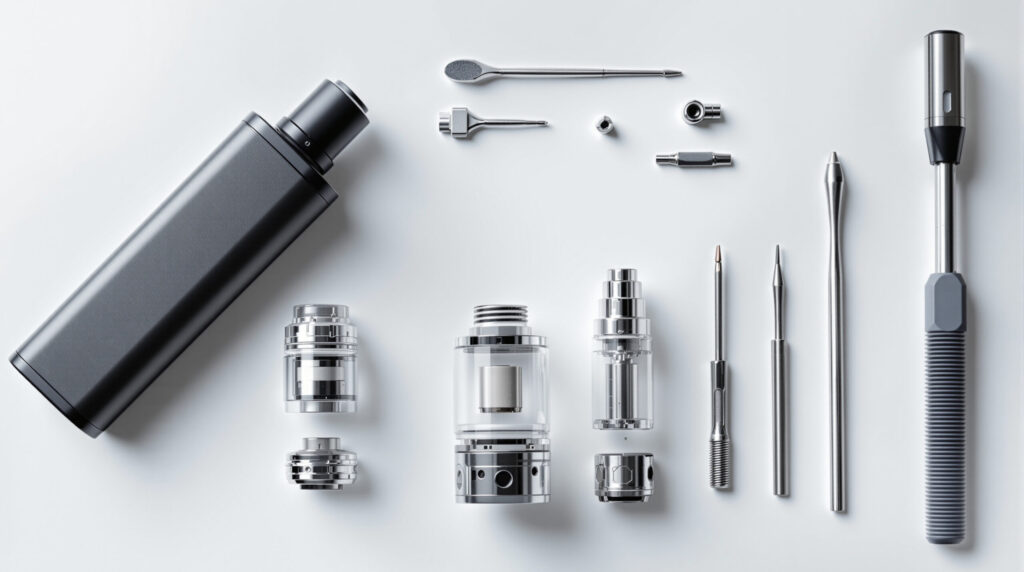
- Does the cartridge manufacturer specify a power range, and can the battery be set or limited to that range?
- Does the center contact sit flush, does it spring back, and does the connection screw together smoothly to the limit without force?
- After assembly, does the draw resistance remain as it should, or does the cartridge block ventilation holes on the battery?
- Do the battery and cartridge come from the same series, or at least from vendors who explicitly recommend the combination?
- Does the connection remain reliable through repeated assembly and disassembly, or does it get loose over time?
- And the most important question first: Is it known what actually fills the cartridge?
That last point is deliberate. It trumps all the others. A technically perfect combination doesn’t make an unknown fill any safer.
Achtest du auf die Kompatibilität von Cartridge und Akku?
Note: This article describes technical relationships and makes no health or efficacy claims. It contains no consumption recommendation and no product purchasing advice. Trade in filled THC cartridges is not permitted in Germany. Anyone experiencing breathing difficulties after inhaling should seek medical advice.








Branchen-Update
News, Analysen und Reportagen — mehrmals im Monat direkt in dein Postfach.
Folge uns