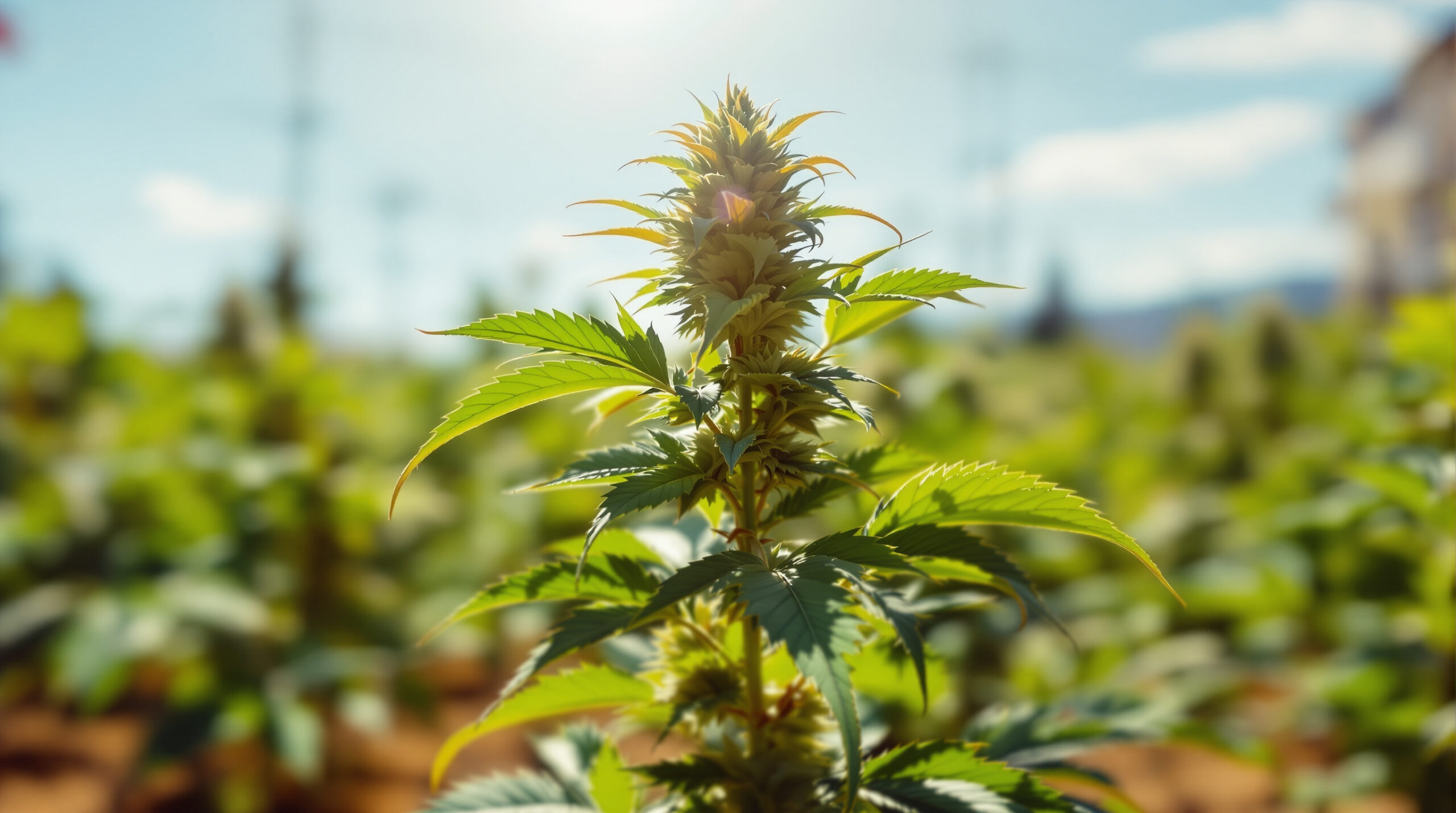
When the mercury climbs to the 35-degree Celsius mark for days on end in July and August, outdoor grows enter a critical phase. Cannabis is a remarkably robust plant, yet sustained heat pushes even vigorous specimens to their limits. Cannabis heat stress is one of the most common causes of yield loss, weaker flowers, and a flat terpene profile during peak summer. Those who recognize the first warning signs early and take targeted countermeasures can often save their harvest with just a few simple steps.
📑 Inhaltsverzeichnis
This article explains at what temperatures things become critical, how heat stress manifests on leaves and buds, and which measures in the garden, on the balcony, or in pots truly help. The focus is on practical solutions: not every heat wave requires expensive equipment, but every one demands swift action.
At what temperature does cannabis heat stress begin?
Cannabis thrives during the day in a range between 24 and 28 degrees Celsius. Within this range, photosynthesis runs efficiently, the leaf stomata remain open, and the plant transpires without disruption. Once ambient temperature rises permanently above 28 degrees, the plant’s metabolism begins to falter. Beyond 30 to 32 degrees, we speak of genuine heat stress, and around 40 degrees, irreversible damage threatens, including plant death.


What matters is not just the peak temperature but its duration. A single hot afternoon usually doesn’t trouble a healthy plant. The problem arises when heat persists over several days and nights bring little cooling relief. When heat combines with dry air and low humidity, the situation worsens because the plant loses water through its leaves faster than the roots can replenish it. This exact lack of equilibrium is the true cause of visible damage.
Recognizing heat stress on leaves
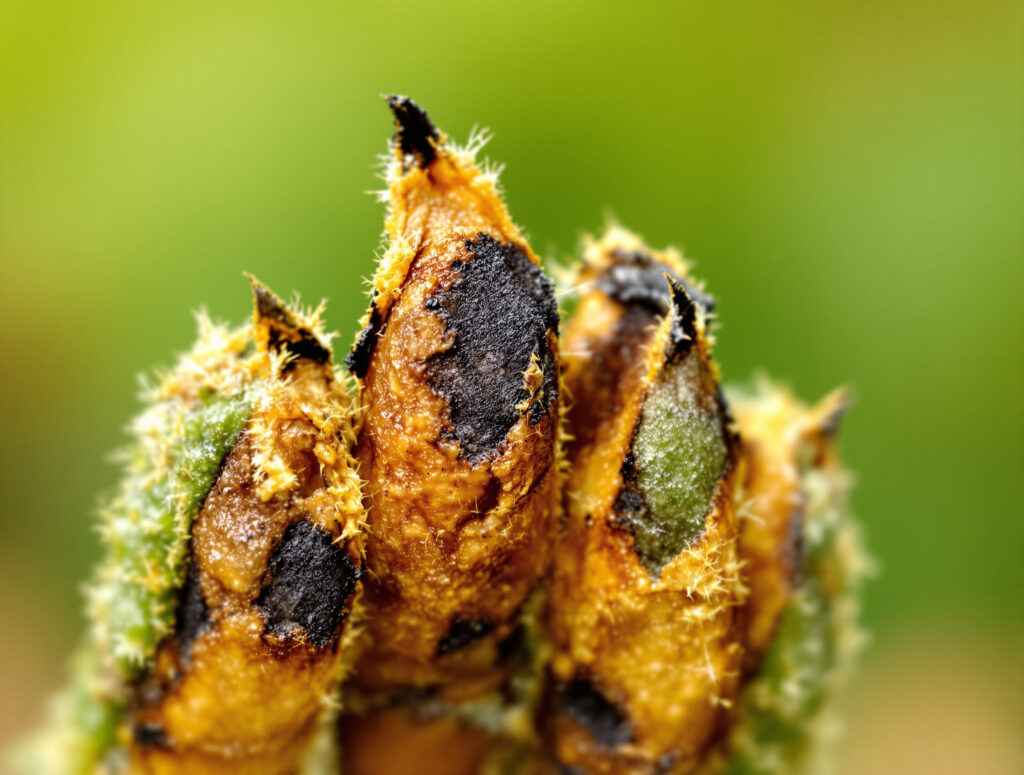
The classic and earliest sign is leaves curling upward. Growers call this „tacoing“ because the leaf edges curl upward like a taco shell. The plant thereby reduces the surface area exposed to intense sun and attempts to throttle evaporation. With prolonged stress, dried, brittle leaf tips and brown, scorched-looking edges appear.
A treacherous symptom is wilted, limp foliage despite moist soil. Those who reflexively water more make things worse because roots suffocate in substrate that is simultaneously too wet and too hot. The plant appears thirsty but actually suffers from heat. Yellow discoloration, falling leaves, and overall slowed growth round out the picture. When multiple symptoms occur simultaneously, swift action is essential.
It’s important to distinguish from similar damage patterns. Light burn, nutrient excess, or pest infestation can look similar at first glance. Heat stress, however, is usually identifiable by symptoms being most severe on the upper, sun-exposed plant parts and corresponding temporally with a heat wave. Those wishing to systematically rule out infestation will find useful hints in our article on when hemp can be planted outdoors for seasonal planning.
Heat during flowering: foxtailing and terpene loss
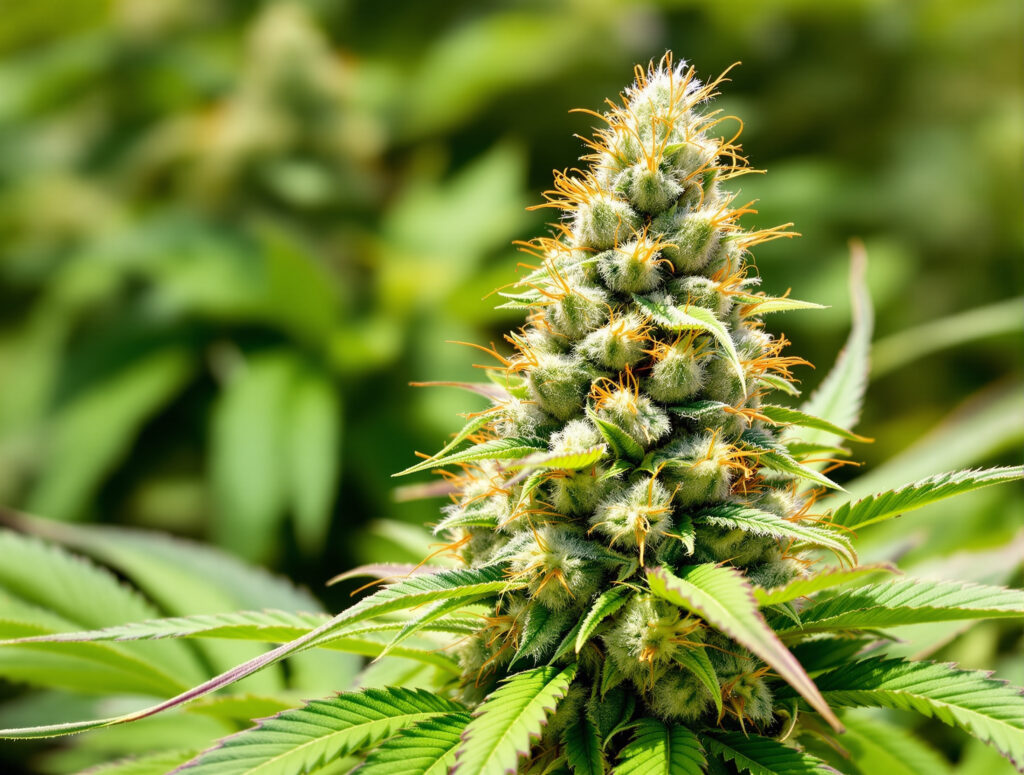
Heat stress becomes particularly problematic during flowering because damage directly translates to harvest quality. High temperatures can cause so-called foxtailing, where elongated, tower-like growths emerge from a compact flower. The buds then appear airy and loose instead of dense, which reduces both harvest weight and appearance.
Even more serious is the loss of aroma and active compounds. Terpenes are highly volatile compounds that evaporate and decompose at high temperatures. Sustained heat can noticeably reduce terpene production, so flowers end up smelling and tasting bland. Simultaneously, trichome formation—where cannabinoids and terpenes are stored—suffers, affecting overall quality. A heat-stressed plant may also respond by forming new male flowers or hermaphroditic traits, which in sinsemilla cultivation jeopardizes the entire crop.
Immediate measures against heat stress outdoors
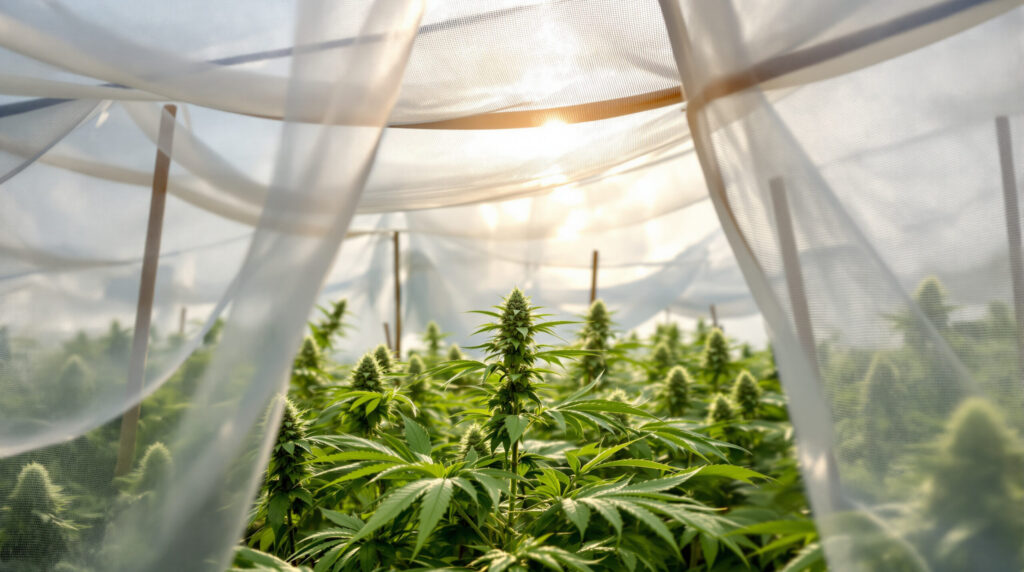
The most effective and simultaneously cheapest measure is shade. A shade cloth with approximately 30 to 50 percent light transmittance takes the edge off midday sun without starving the plant of light. On balconies or in container gardens, it often suffices to move plants into partial shade during the hottest hours or set up a light sun umbrella. For in-ground beds, the net can be stretched over simple stakes or a frame.
When watering, water early in the morning and late in the evening, never in the blazing midday sun. This allows water to penetrate deep into the soil during cooler hours instead of evaporating immediately. A five- to ten-centimeter-thick mulch layer of straw, bark chips, or grass clippings keeps substrate moisture in and protects the sensitive root zone from overheating. For container plants, light-colored outer pots or a second, larger pot as a shell help because dark containers heat up significantly in the sun. Those unable to be on-site during several hot days should secure themselves early with a well-planned vacation watering system.
Fertilization also plays a role. Potassium helps the plant use water more efficiently and strengthens cell walls against stress. Some growers additionally rely on algae or kelp extracts as well as silica, which are said to support heat resistance and recovery. Nitrogen-heavy fertilizers, however, should be reduced during a heat wave because they promote rapid, soft growth that is particularly vulnerable to heat.
Preventing heat stress: planning the season from the start
The best strategy against heat stress begins long before the first heat wave. Already during variety selection, much can be done right, as Mediterranean and landrace-based genetics tolerate heat far better than cool-loving varieties from northern latitudes. Those growing in a region with hot summers should deliberately select heat-tolerant lines.
A healthy, deep root system is the plant’s insurance policy during dry periods. A sufficiently large container, loose, well-draining substrate, and consistent prevention of waterlogging ensure roots can draw water from deeper layers. Living soil with high humus content stores moisture better and buffers temperature fluctuations. The growing location itself can be planned: a location with morning sun and shade during the hot afternoon is often ideal in peak summer. Those wishing to approach the entire year systematically will find a red thread from sowing to harvest in the outdoor annual guide.
With climate change, extreme weather events are becoming more frequent, and prolonged heat periods already belong to the standard summer repertoire in many regions. Those who set up their grow for this from the outset, rather than merely reacting in emergencies, get through the hot season most smoothly. Heat stress is not fate but a matter of preparation and attentiveness.
Frequently Asked Questions
At what temperature does cannabis suffer from heat stress?
Above approximately 28 degrees Celsius, metabolism begins to slow; from 30 to 32 degrees, we speak of genuine heat stress. Duration is crucial: sustained heat over several days and warm nights are far more dangerous than a single hot afternoon.
How do I recognize heat stress on my plant?
The clearest sign is leaves curling upward, the so-called tacoing. This is accompanied by dried leaf tips, brown edges, and limp foliage despite moist soil. When these symptoms appear during a heat wave primarily on upper, sun-exposed shoots, heat stress is the most likely cause.
Should I simply water more during heat?
Not automatically. Wilted foliage with moist soil is a heat symptom, not water shortage. Additional watering in this situation suffocates roots in wet, hot substrate. More sensible is watering early in the morning and late in the evening and providing shade.
Does cannabis recover from heat stress?
During the growth phase, plants typically recover well when temperature drops, shade is provided, and watering is stabilized. During flowering, however, damage like foxtailing or terpene loss often remains, making prevention particularly important here.
Does shade cloth really help against heat stress?
Hattest du schon einmal Hitzestress bei deinen Pflanzen?
Yes, shade cloth with 30 to 50 percent light transmittance ranks among the most effective and inexpensive measures. It takes the edge off midday sun without severely restricting photosynthesis and noticeably lowers canopy temperature.







Branchen-Update
News, Analysen und Reportagen — mehrmals im Monat direkt in dein Postfach.
Folge uns