
Sponsored · This article is produced in paid partnership with NORDDAMPF. Article selection, research, and evaluation are independently handled by Hanf Magazin.
📑 Inhaltsverzeichnis
Vaporizers are almost always compared by temperature range and heat-up time. For everyday use, however, other factors matter more: how the device heats, how stably it maintains temperature, how long the battery lasts, and what happens when something gets stuck after two years.
Anyone buying a vaporizer for the first time faces spec sheets that all look similar. Nearly every device boasts a range up to about 210 degrees, and nearly every one advertises a short heat-up time. The differences you actually notice after a few months of use are rarely listed there. This article walks through the four factors that prove most important in real-world use.
The Heating System Determines How the Device Feels
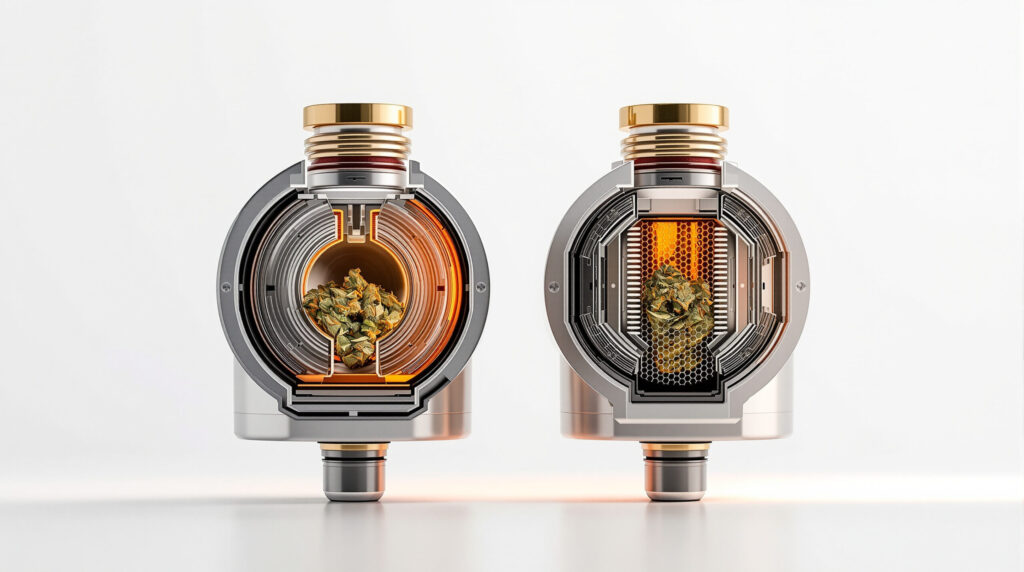
Conduction means the material sits directly on a hot surface. It’s fast and produces dense vapor, but heats unevenly, so stirring between draws is often necessary. Convection uses hot air flowing through the material. It’s more uniform and tastes cleaner, but requires more energy and thus more battery power. Hybrid devices combine both approaches.
There’s no universal answer to which system is better—it depends on whether someone prefers short individual draws or longer sessions. We’ve explained in detail how both principles work physically and what that means for cannabinoid transfer in our article on Convection vs. Conduction.
Temperature Control: The Display Number Tells You Little
What matters isn’t what temperature range is available, but how precisely the device maintains it during a draw. Every draw cools the chamber. How quickly a device compensates determines whether the second and third draws taste like the first. Budget devices show a temperature number but regulate roughly, which shows up as burnt flavor at the end of the chamber.
A practical comparison point: Does the manufacturer specify the temperature adjustment increments and describe how regulation works? Manufacturers who say nothing about this usually have nothing to say.
Battery: Replaceable Beats Built-In
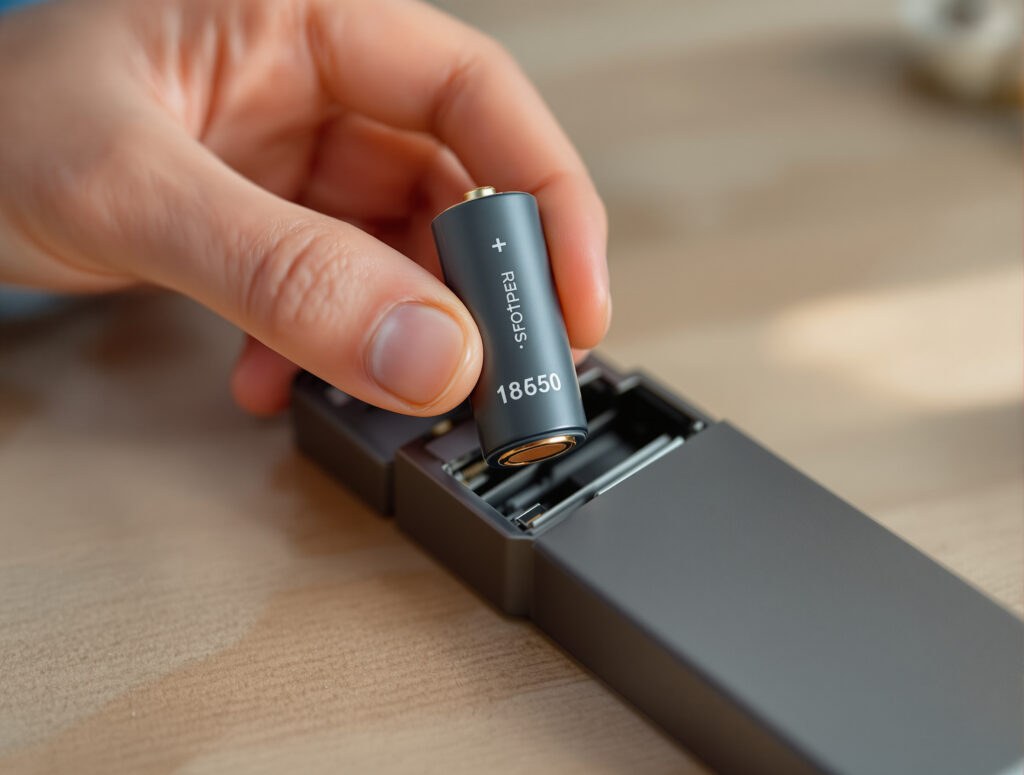
Manufacturer runtime claims are based on ideal conditions. A more realistic question is how many sessions a device can deliver before needing to plug in, and whether it can be used while charging. The battery becomes even more critical after two to three years, as it’s the component that degrades first.
Devices with replaceable batteries have a long-term advantage, even if they initially seem less convenient. With a built-in battery, the key question is whether the manufacturer offers a replacement or if the device dies with the battery.
Warranty and Spare Parts: The Point Comparisons Miss
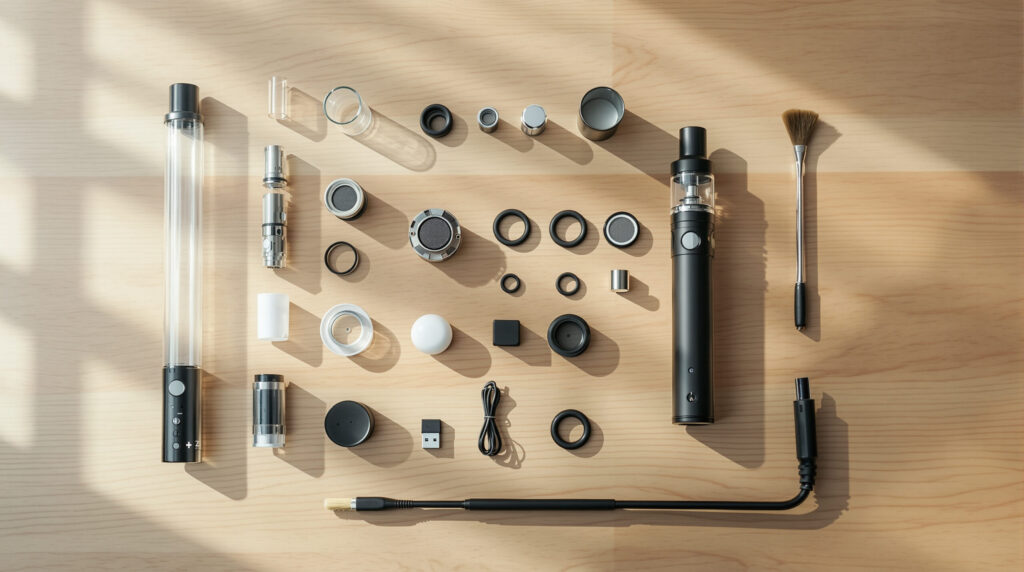
A vaporizer is a device with wear parts. Screens, gaskets, mouthpieces, and glass components break—that’s normal. The most practically important question is whether these parts are available individually and for how long. With imported devices without European representation, a cracked glass mouthpiece often means the end of the device.
Then there’s warranty length and the question of where to send a defective device. A manufacturer based in Germany or the EU isn’t inherently a quality marker, but it shortens shipping times and avoids customs issues on returns. If you search the manufacturer’s website for spare parts before buying and find nothing, you already know enough.
A German Manufacturer as Example: NORDDAMPF
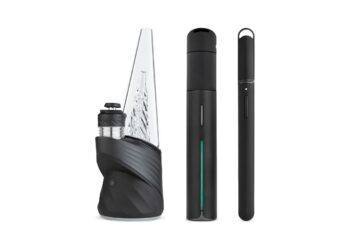
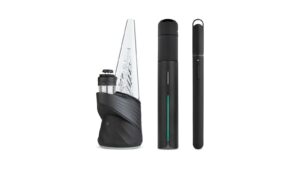
How this translates into a product lineup can be seen with vaporizers from NORDDAMPF. The company is based in Ganderkesee, Lower Saxony, and operates three device lines that differ less by features than by target user.
- RELICT is the flagship model and uses dual heating according to the manufacturer—combining both principles. We’ve covered this device in a detailed review.
- HAMMAH targets compact design with high performance, making it the on-the-go device. We’ve also published a comprehensive review of this one.
- VOITY is positioned as an entry-level device for those who want to first figure out if vaporizing suits them.
What’s interesting about this structure isn’t any single specification but the logic behind it: each product line has its own accessories and spare parts, from glass mouthpieces to individual components. This is precisely the point from the previous section, and it’s easier to deliver as a manufacturer based in Germany than as a direct importer. How the company views its own development was the subject of its own keynote, which we covered.
Five Questions Before Buying
- Conduction, convection, or hybrid—and does it match your preference for short draws or long sessions?
- In what increments can temperature be adjusted, and does the manufacturer explain how temperature regulation works?
- Is the battery replaceable, and if not, does the manufacturer offer replacements?
- Are screens, gaskets, and mouthpieces available for individual purchase?
- How long is the warranty, and where does the device go for repairs?
If you can answer these five questions, you’ve usually already made your decision. Everything else is personal preference, and that can’t be read from a spec sheet anyway.
Note: This article reflects the status as of October 8, 2026. Information about devices and product lines comes from the respective manufacturers and has not been laboratory-tested by us. This article contains no health claims and no consumption recommendations. Devices of this type are for adults only.
Worauf achtest du beim Kauf eines Vaporizers am meisten?
Sources: NORDDAMPF manufacturer information, October 2026; our own reporting on Relict, Hammah, and the NORDDAMPF keynote.








Branchen-Update
News, Analysen und Reportagen — mehrmals im Monat direkt in dein Postfach.
Folge uns