Germany’s cannabis scene is no longer what it once was. Since April 1, 2024, when cannabis became legal for adults in Germany, the community surrounding the hemp plant has undergone a fundamental transformation—more visible, more diverse, politically self-assured, and culturally productive than ever before. What long existed as a subculture on society’s margins has developed into a broad, diverse community that fills conventions and festivals, has built its own institutions, and actively shapes public discourse about cannabis, consumption, and responsibility.
📑 Inhaltsverzeichnis
- Mary Jane Berlin 2026: The Heartbeat of German Cannabis Culture
- The Cannabis Event Calendar 2026: A Scene in Full Bloom
- Cannabis Social Clubs: The New Foundation of Community
- Cannabis, Art, and Creative Culture: A Scene Finds Its Voice
- The Balance Sheet: What Legalization Really Changed for Cannabis Culture
- Frequently Asked Questions About Germany’s Cannabis Scene & Culture
- 💬 Fragen? Frag den Hanf-Buddy!
The transformation is everywhere. Cannabis Social Clubs have established themselves in dozens of German cities, offering members not just access to legally cultivated cannabis, but genuine social community. Festivals and conventions have reached record attendance numbers. Artists, musicians, and filmmakers openly engage with the topic. And in everyday conversations—around kitchen tables, in podcasts, in newspaper articles—cannabis has shifted from a taboo subject to a normal part of public discourse.
This guide provides an overview of Germany’s cannabis scene and culture in 2026: Where does the community meet? What are the most important events? How have Cannabis Social Clubs evolved? And what has legalization actually changed culturally?


Mary Jane Berlin 2026: The Heartbeat of German Cannabis Culture
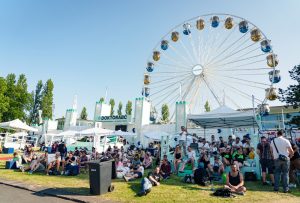
If you had to capture Germany’s cannabis scene in a single image, you can’t overlook Mary Jane Berlin. From June 11-14, 2026, the convention grounds at Hammarskjöldplatz in Berlin-Westend will transform into the epicenter of European cannabis culture. 500 exhibitors, over 60,000 expected visitors from Germany, Austria, Switzerland, and the rest of Europe—and a program that goes far beyond a typical trade show.
Ten years after its founding, Mary Jane has become a cultural phenomenon. What began as a niche convention for growing enthusiasts and CBD providers has evolved into an event representing the full breadth of the scene: medical patients discuss cannabis therapies with doctors; licensed Cannabis Social Clubs present their model; lawyers explain the latest developments in cannabis law; activists reflect on decades of political struggle. In the evenings, the festival atmosphere takes over: live music, DJ sets, art installations, and food vendors transform the grounds into a major party for the scene.
What distinguishes Mary Jane from other trade shows is this connection between factual information and lived culture. You don’t just attend to learn about new grow light technology or CBD extracts—you attend because it’s a gathering. An annual reunion of the community where you reconnect with acquaintances from last year, make new contacts, and leave with the feeling of being part of something larger. This sense of community was already the core of the event before legalization, but the legal shift gives it an entirely new quality: today you’re not celebrating counterculture, but a recognized community anchored in society.
The exhibitor program reflects the industry’s professionalization. Beyond traditional grow equipment suppliers and seed banks, telemedicine platforms from the medical cannabis sector, sustainable packaging companies, cannabis law firms, and Social Clubs from various states present themselves. The B2B sector has grown—cannabis has become a serious business venture for many entrepreneurs. Tickets for Mary Jane Berlin are available online, with prices varying depending on day passes and evening programs.
The Cannabis Event Calendar 2026: A Scene in Full Bloom
Mary Jane Berlin is the flagship, but it’s long since ceased to be the only highlight on the German cannabis scene’s annual calendar. 2026 has established a dense schedule of conventions, festivals, and community events spread throughout the year, addressing different segments of the community.
The CannaFestival in Karlsruhe, taking place July 17-19, 2026, deliberately positions itself as an alternative to the big-city convention atmosphere. Over 80 exhibitors, a stage program with live music acts, and a relaxed, open atmosphere particularly attract younger audiences who see cannabis legalization primarily as a cultural shift rather than just an economic opportunity. The southern festival is attractive to many because it feels more regional, personal, and less commercial than the large conventions in major cities.
August hosts several events: Berlin’s High Festival explicitly understands itself as a cultural event. Through photo exhibitions on cannabis culture, film series, and panel discussions on social issues, it aims to offer a different perspective than product-oriented conventions. Simultaneously, Cannafair invites visitors to Düsseldorf’s Areal Böhler. The open-air format with music, street food, and a broad exhibitor program has earned itself a reputation as the coziest of the major cannabis events—something like a summer festival for western Germany’s scene.
The convention year concludes with the CB Expo in Dortmund in September, which is more B2B-oriented, attracting entrepreneurs, investors, and service providers from the cannabis industry. The nationwide calendar is supplemented by a growing number of regional events: Cannabis Social Clubs host open information evenings, local meetups form, and large cities feature regular cultural event series on the topic. The scene is no longer concentrated in Berlin—it has arrived across German society.
Cannabis Social Clubs: The New Foundation of Community
If you had to name a single institutional characteristic of Germany’s cannabis scene after legalization, it would be Cannabis Social Clubs. Since the Cannabis Act took effect in April 2024, registered cultivation associations have been founded throughout Germany, legally permitted to grow and distribute cannabis to their members. Today, these clubs are far more than mere supply facilities—they are where the new cannabis community culture emerges.
The legal model mandates community by structure. A Cannabis Social Club can have a maximum of 500 members, and members must actively participate in club life—through helping with cultivation, administrative work, or attending educational events. What initially sounds like bureaucratic red tape creates something more valuable in practice than merely affordable cannabis access: genuine social bonds. In established clubs, members report shared harvest evenings filled with conversation and laughter; workshops on cultivation biology and pest control; parties celebrating good harvests.
For many, the Cannabis Social Club has realized what its proponents always promised: a place for responsible consumption within a social framework. This involves more than just cannabis access—it’s about knowledge transfer and mutual support. Experienced growers pass their knowledge to newcomers; legally savvy members help others understand their rights; together people navigate sometimes contradictory regulatory requirements. Those wanting to establish their own club can find a detailed step-by-step guide to founding a Cannabis Social Club that considers all legal requirements of the Cannabis Act.
The political dimension of the clubs shouldn’t be underestimated. Their federation, CSC Deutschland, coordinates the interests of cultivation associations against authorities and politicians, organizes trainings for club board members, and fights for improvements to the Cannabis Act. Through the clubs, the cannabis scene has gained institutional power it lacked years ago: it’s now a conversation partner, not merely the object of political decisions.
Cannabis, Art, and Creative Culture: A Scene Finds Its Voice
Legalization made something possible that was previously difficult: openly engaging with cannabis as a cultural topic without risking reflexive societal rejection. Cultural production around the topic has increased significantly over the past two years—and it has gained depth.
Documentaries about the history of cannabis prohibition and the long fight for legalization play in German cinemas and on streaming platforms. Podcasts addressing cannabis culture, consumption safety, and social questions reach hundreds of thousands of listeners. Photographers document everyday life in Cannabis Social Clubs; writers process the topic in narratives about urban life, identity, and consumption culture. Hamburg’s Museum for Hamburg History presented the first museum exhibition on cannabis history in Germany in 2025—a signal that the topic has arrived in high culture.
In the music scene, which has always had a close relationship with the topic, public engagement has relaxed. Hip-hop artists who once relied on coded references speak openly. Even genres without traditional cannabis affinity discover it as part of a broader lifestyle debate. At Mary Jane Berlin and High Festival, this cultural production plays a central role: stages host not just musician acts but serious cultural engagement.
What’s striking is how strongly cannabis culture connects with sustainability, craftsmanship, and regionality. Many Social Clubs focus on organic cultivation, carefully document their strains, and cultivate a slow cannabis philosophy prioritizing quality over quantity. This is also a cultural statement: cannabis as a handcrafted product with history and origin—not a cheap mass product.
The Balance Sheet: What Legalization Really Changed for Cannabis Culture
Two years after the Cannabis Act took effect, an initial cultural assessment is possible—and it’s nuanced. Legalization has moved much, but not everything the scene hoped for.
Positive is the normalization. Cannabis is more visible, more socially accepted; conversation about it comes easier. Those openly discussing their consumption, joining a Social Club, or appearing at a cannabis convention no longer face the stigmatization that was once automatic. This social shift is subtle but real—and it has changed the culture. An honest assessment of legalization turns out more positive than early critics expected.
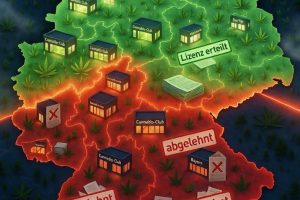
Simultaneously, contradictions remain. The black market hasn’t disappeared despite legalization—particularly because the number of licensed Social Clubs is still insufficient to meet actual demand. Regulation in many states is bureaucratically burdensome; local authorities‘ differing interpretation of the law creates a patchwork frustrating the scene. Those wanting current legal information—such as the applicable THC limit for driving in 2026—can find reliable, up-to-date information online.
The scene itself has changed through legalization: more professional, more political, more heterogeneous. Beyond classic enthusiasts, new groups are arriving—health-conscious people discovering cannabis as an alcohol alternative; older people returning after decades; medical patients. This diversification is enriching but also changes the community’s character. The subcultural gives way to broad mainstream interest. Some see this as loss, others as success. For those wanting to go deeper—such as through their own cultivation—there’s a comprehensive overview of the costs and possibilities of home growing in 2026.
What remains, unchanged and foundational: the sense of community. Germany’s cannabis scene in 2026 is a vibrant, engaged community meeting at events like Mary Jane Berlin, organizing in Social Clubs, producing culturally, and debating politically. It’s more colorful, larger, and more open than ever—yet still recognizably the same community that together fought the long battle for legalization.
Particularly striking is the change in public perception of the cannabis scene. While the community was previously primarily defined by clichés and prejudices—the lazy stoner, irresponsible youth—the legalization debate and its implementation have created a more nuanced picture. Cannabis consumers are now visibly present in professions previously unconnected to the topic: doctors, lawyers, entrepreneurs, politicians. This normalization has also transformed the scene itself. It appears more publicly, communicates more professionally, and invests in self-presentation—while remembering its roots in a libertarian, anti-prohibition movement that gave the scene its cohesion.
The internationalization of Germany’s cannabis scene is another remarkable 2026 trend. Mary Jane Berlin attracts exhibitors and visitors from across Europe; Dutch, Czech, and Swiss cannabis companies present themselves at German conventions; German Social Club models are discussed abroad and viewed as blueprints. Despite all regulatory contradictions, Germany has become one of Europe’s most exciting cannabis markets—and the scene is aware of this status. Hanf Magazine has documented these developments for years and understands itself as part of this community: informing, accompanying, critically reflecting.
A final, often underestimated aspect of 2026 cannabis culture is its digital dimension. Online communities, forums, and social media groups are many people’s first port of call—for cultivation questions, legal information, or finding a club. Platforms like hanf-magazine.com, along with Reddit communities and specialized Discord servers, pool knowledge and enable exchange across geographic boundaries. For people in rural areas where few Cannabis Social Clubs exist and no nearby conventions occur, the digital community is often the only connection to the scene. This shows: cannabis culture doesn’t just happen at festivals and Berlin club rooms—it exists everywhere people talk, ask questions, and share experiences.
Frequently Asked Questions About Germany’s Cannabis Scene & Culture
When and where does Mary Jane Berlin 2026 take place?
Mary Jane Berlin 2026 takes place June 11-14, 2026 at the Berlin convention grounds at Hammarskjöldplatz, North Entrance, 14055 Berlin. The event is considered Europe’s largest cannabis convention and combines over 500 exhibitors with comprehensive cultural programming, music, and festival atmosphere. Day tickets are available online through the event’s official website.
How do I find a licensed Cannabis Social Club near me?
Licensed Cannabis Social Clubs must be officially registered and government-approved under the Cannabis Act. Platforms like WeedVibes.de or the CSC Deutschland federation offer listings of approved clubs in various cities. Local cannabis communities on social networks also help with orientation. Important: only clubs with official operating permits can legally cultivate and distribute cannabis to members.
What can I consume at a cannabis event or festival?
The Cannabis Act allows adults 18 and older to possess up to 25 grams of cannabis in public. On private event grounds, however, organizers‘ rules apply—consumption may be restricted or prohibited on the premises. Driving under cannabis influence is legally prohibited; the THC limit for driving is 3.5 nanograms per milliliter of blood serum.
Are there cannabis events outside Berlin?
Yes, the scene is active nationwide. CannaFestival takes place in Karlsruhe, Cannafair in Düsseldorf, CB Expo in Dortmund. Additionally, numerous regional club events, information evenings, and local meetups occur in cities like Hamburg, Munich, Frankfurt, Cologne, Leipzig, and many others. Current event calendars can be found on specialized platforms like CannaMesse.de or in newsletters from major Cannabis Social Clubs.
How has cannabis culture changed since legalization in 2024?
Legalization has significantly diversified and made the cannabis scene more visible. New groups—older consumers, health-conscious people, medical patients—have expanded the community. Cannabis Social Clubs have become genuine community spaces. Festivals and conventions record record numbers. Culturally, the topic has gained depth: documentaries, podcasts, art projects, and literature openly engage with it. Simultaneously, the black market remains problematic, and bureaucratic hurdles slow some clubs‘ development.
What costs are involved in Cannabis Social Club membership?
Membership fees vary considerably by club—typically ranging from 20 to 60 euros monthly. Additionally, cannabis distributed by the club costs money, oriented toward production costs. Clubs cannot profit, so prices are often cheaper than the black market but more than informal sources. Beyond membership fees, many clubs require volunteer work in the form of hours spent cultivating or at club events.
Is cannabis tourism to Germany legal?
German cannabis law targets residents—Cannabis Social Clubs can only distribute to adult members with residency or habitual residence in Germany. Tourists cannot become club members. Possessing up to 25 grams in public is legal for all adults, but buying and distributing through clubs remains restricted to residents. The second pillar of the Cannabis Act—regulated distribution points for non-club members—hasn’t yet been fully implemented in Germany.


Branchen-Update
News, Analysen und Reportagen — mehrmals im Monat direkt in dein Postfach.
Folge uns