Few plant fibers have undergone such a dramatic shift in significance as hemp. For centuries, it formed the backbone of European textile supply, clothing soldiers, sailors and craftsmen, providing yarn for sails, sacks and shirts. With the industrialization of cotton and the political prohibition of the cannabis plant, it fell into obscurity. Today it stands once again at the center of a debate that no longer concerns only the sustainable fashion scene: Can the ecological damage of the global textile industry be mitigated with a domestic, water-saving, regenerative fiber?
📑 Inhaltsverzeichnis
- A Brief History of Hemp Textiles in Europe
- What Are Hemp Textiles? Material, Origin and Definition
- From Field to Thread: The Hemp Fiber Processing Chain
- The Special Properties of Hemp Fabrics
- Hemp vs. Cotton: The Ecological Comparison in Numbers
- Fashion, Outdoor and Industry: Where Hemp Textiles Are Found Today
- The European Hemp Textile Chain and Its Challenges
- Care, Lifespan and Purchasing Criteria
- Outlook: What the Fiber Must Accomplish in the Coming Years
- Frequently Asked Questions
- 💬 Fragen? Frag den Hanf-Buddy!
This guide brings together the current state of knowledge on hemp textiles for consumers, designers and anyone who wants to understand the topic thoroughly. It explains what makes the fiber unique, how it travels from field to loom, how to recognize good fabric quality, and what role hemp plays in the fashion, outdoor and home textile industries. Those who have learned individual aspects in recent years will find the connections here. Those new to the topic will get a complete map of the subject.
A Brief History of Hemp Textiles in Europe
The textile use of hemp can be traced back to the Bronze Age in Central Europe. Finds from the Alpine region prove that farming communities were already spinning hemp yarn, knotting it and dyeing it with plant-based pigments more than three thousand years ago. In the Middle Ages, hemp moved into nearly every village workshop because it grew on almost every Central European field, required little care, and provided an extraordinarily versatile yarn. Those who want to trace the broad arc of the fiber from antiquity to modern times will find the detailed chronology there.


With the industrialization of the 19th century, a gradual decline began. The mechanization of cotton processing proceeded rapidly because short, uniform seed fibers were easier to process on new spinning machines than the long, bulky bast fibers of hemp. Additionally, colonial cotton from overseas became available at falling prices. The last major hemp spinning mills in Central Europe closed in the mid-20th century, not least because cannabis prohibition made fiber hemp cultivation difficult in practice, and fiber hemp merged with drug hemp in public perception, even though both represent different cultivated plants.
Only the ecological turn of the past two decades has brought the fiber back into discourse. Rising water stress in major cotton-growing regions, microplastic pollution from synthetics, and new consumer awareness of supply chain transparency create an environment in which hemp becomes competitive again. EU funding programs for regional fiber industries are doing their part to stimulate investments in modern processing machinery.
What Are Hemp Textiles? Material, Origin and Definition
In the industry, hemp textiles are understood to be fabrics whose yarn is derived in whole or in part from the bast fibers of the fiber hemp plant (Cannabis sativa L.). Within the EU, all varieties are classified as utility hemp whose THC content is below the permitted threshold. With the Cannabis Act and the raising of the THC threshold, the permitted variety list has expanded, and the cultivation area in Germany has grown noticeably in recent years. For information on the legal and agricultural framework conditions that apply, see our background article on utility hemp in Germany.
The textile fiber sits inside the hemp stalk, embedded in a resinous, woody core layer called shives. From one hectare of hemp, processors obtain approximately one ton of pure bast fiber, while several tons of shives are produced for insulation and animal husbandry, as well as nutrient-rich seeds for food and oils. This multi-use is one of the reasons why hemp is so attractive to organic farming: fiber, building chemistry and food are produced simultaneously on a single area.
Unlike cotton, which grows as a seed fiber directly on the grain, hemp fiber is a bast fiber. This means it is significantly longer, coarser and more tear-resistant than cotton fibers, but in unprocessed form also stiffer. This characteristic shapes the entire subsequent processing path and explains why hemp textiles feel more pleasant the longer they are worn and washed. The fiber breaks down slightly with each wash cycle and becomes softer in the process, without losing its strength.
From Field to Thread: The Hemp Fiber Processing Chain
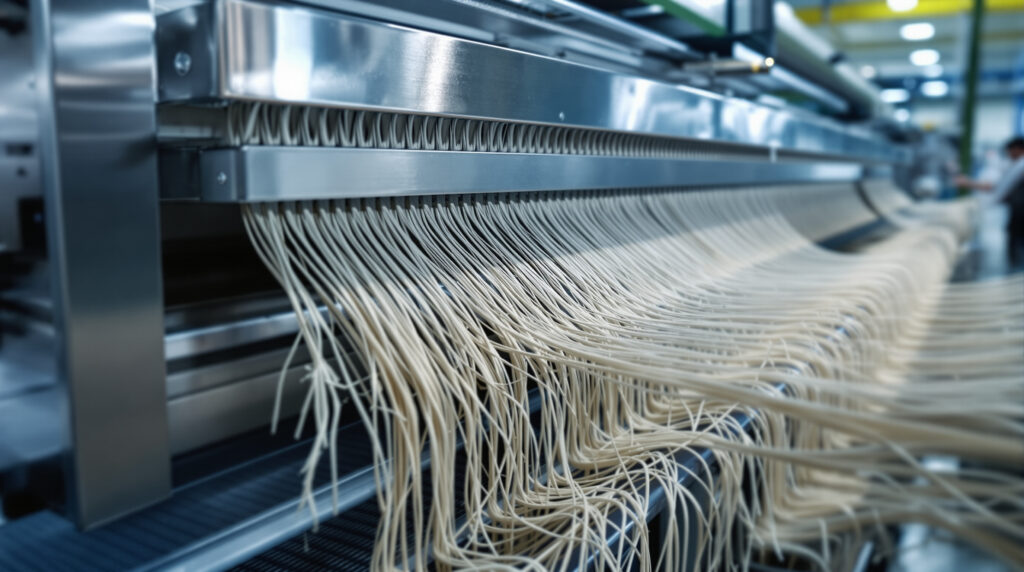
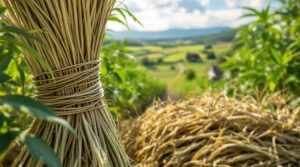
The processing chain for hemp textiles begins in late summer with the harvest. The tall stalks are cut and left lying in the field so that bacteria, fungi and weather break down the pectins that bind the fiber and wooden core. This process is technically called retting. Careful retting later determines the luster, purity and spinnability of the fiber. We have examined the individual steps in detail in our article on hemp processing technology.
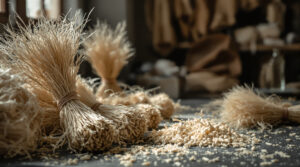
In the next step, the dried stalks undergo scutching. Mechanical rollers break out the shives, and brushes and hackling machines comb the fibers parallel. The result is long, shiny bast fibers, technically referred to as long fibers, which are suitable for classic, linen-like hemp fabrics. Shorter tangled fibers also result, the so-called tow, which is cut shorter in further processing and cottonized.
Cottonization is the central lever for bringing hemp into modern spinning mills. In this chemical-physical process, the fiber is brought to a cotton-like length and fineness so that it can be processed on conventional cotton spinning machines. Only then is it possible to realize mixed fabrics with cotton, wool or Tencel without having to build a dedicated hemp spinning mill. Pure hemp yarns from long fibers, so-called wet hemp yarns, are still considered the highest quality, but their production requires specialized machines that are hardly operated in Europe anymore.
From the finished yarn, different fabrics are created depending on the desired fabric. Light, breathable fabrics for shirts and dresses are often based on hemp-cotton blends of approximately 55 to 45 percent. Robust outdoor and workwear fabrics use higher hemp content up to 100 percent. Home textiles such as bedding and curtains benefit from the natural antibacterial properties of the fiber, which permanently counteracts mold and odor formation.
The Special Properties of Hemp Fabrics
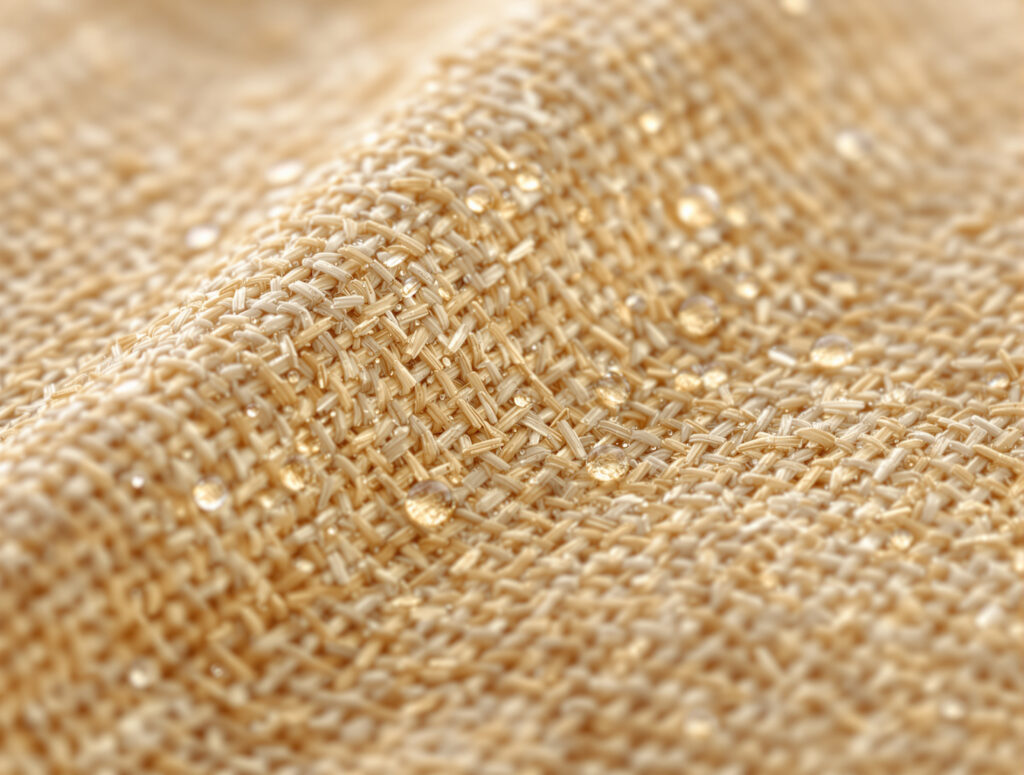
Four properties clearly distinguish hemp textiles from other natural fibers. The first is tensile strength. Hemp is among the strongest plant fibers, which manifests itself in everyday use in the form of longer durability. Shirts, t-shirts and pants made from hemp typically last two to three times longer than their pure cotton counterparts without losing shape. This aspect is exactly what makes the fiber so attractive to sustainability-oriented brands: those who wear longer consume less fabric overall.
The second property is moisture management. Hemp textiles can absorb up to 30 percent of their own weight in moisture without feeling wet, and release it equally quickly. In summer, the fabric feels cooling, in winter insulating. Outdoor brands increasingly use this effect in functional clothing and mid-layers, often combined with merino wool or recycled polyester fibers.
Third, the natural fiber structure protects against UV radiation. Studies show that hemp fabrics, depending on weave density, absorb between 70 and 90 percent of UV radiation, while cotton and linen of comparable density only achieve 30 to 60 percent. For summer shirts, sun hats and clothing in sunny regions, this is a practical benefit that requires no chemical impregnation.
The fourth property concerns skin climate. Hemp is naturally antimicrobial because the fiber provides poorer conditions for microbial colonization than cotton or synthetics. Body odor develops later, laundry needs to be treated less often at high temperatures, and allergy sufferers frequently report good tolerance. This property does not depend on whether the fabric has been additionally treated, but is a characteristic of the fiber itself.
Hemp vs. Cotton: The Ecological Comparison in Numbers
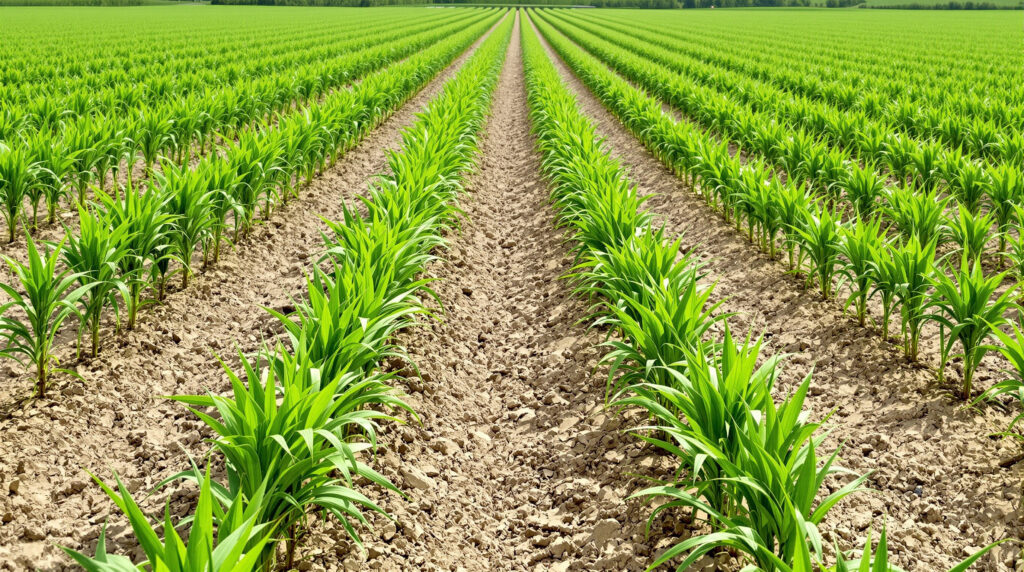
The ecological balance of hemp textiles is often praised in sweeping terms, but can be quantified concretely. The central factor is water. For one kilogram of cotton fiber, depending on region and source, between 9,000 and 17,000 liters of water are accounted for, including irrigation, processing and pre-yarn stages. In a comparable calculation, hemp requires approximately 2,000 to 3,500 liters, and in many European growing regions it grows even without artificial irrigation. For Central Asian cotton regions, where the Aral Sea supply crisis stands as a monument to the industry’s own practices, hemp would be a theoretically immediately applicable alternative.
The second factor is pesticides. Cotton covers approximately 2.5 percent of global agricultural land but consumes about 16 percent of all pesticides used. Hemp, on the other hand, typically requires no pesticides at all because its dense growth suppresses weeds and its essential oils repel pest insects. This not only saves production steps but also reduces residues in soil, water and end product.
The third measure is land yield. On one hectare, a hemp farmer harvests two to three times as much fiber as a cotton farmer on the same area. When you add timber content and textile raw material together, hemp also comes to approximately 1.6 tons of CO2 per ton of dry mass sequestered during growth. This means hemp fiber is not only less harmful than cotton but is actively climate-beneficial during the cultivation phase.
In a direct comparison of hemp and cotton, the finding is clear: hemp ranks first in every discipline—water, pesticides, land efficiency and CO2 sequestration. The weakness of the fiber so far lies not in the field but in industrial further processing.
Fashion, Outdoor and Industry: Where Hemp Textiles Are Found Today
The most visible stage for hemp textiles is the sustainable fashion industry. Brands like HempAge, Bleed, Recolution and Hessnatur have been working with hemp-cotton blends for shirts, pants, sweaters and dresses for years. In the premium segment, small manufactures like Hanfliebe, Cannamoda and ELZBAG have partially brought the complete value chain back to Europe. Read about which designers and consumers stand behind this renaissance in our report on sustainable hemp fashion.
The second pillar is outdoor and functional clothing. Hemp provides mechanical robustness and moisture regulation that synthetic fibers only achieve with elaborate coatings. Patagonia, Vaude and some specialized workwear brands use hemp content in pants, jackets and backpacks. The Portuguese label 8000Kicks manufactures complete sneakers from hemp canvas, including waterproof impregnation. In the occupational clothing industry, blends of hemp, organic cotton and a portion of recycled polyester are primarily used because they well balance fabric durability and wearing comfort.
Home textiles are the quiet growth field. Bedding, towels, curtains and upholstery fabrics benefit from the combination of strength, antimicrobial properties and attractive appearance. Hemp bedding that initially feels slightly stiff becomes silkier with each wash cycle but retains the cooling summer effect. Industry experts estimate that this segment can achieve double-digit growth rates in the next five years because home textiles are used longer and consumers are particularly attentive to skin tolerance here.
Finally, industrial applications are rediscovering the fiber. Composites of hemp and bio-resins replace fiberglass in automotive body construction and interior trim. Military applications are also being examined because the fiber is thermally stable and difficult to detect. Industry analysts have been speaking for some time of a megatrend that extends far beyond classical clothing and releases new investments in cultivation, processing and research.
The European Hemp Textile Chain and Its Challenges
As convincing as the fiber presents itself, its processing logistics are equally problematic. China has dominated the trade in textile hemp yarns for nearly three decades. Specialized machines that once stood in European spinning mills were sold to Asia after the insolvency of those facilities. Today, most globally traded hemp yarns come from provinces like Heilongjiang or Anhui, often with significantly lower social and environmental standards than European producers must maintain.
Initiatives like the Fachverband Hanftextilien e.V. (Hemp Textiles Trade Association) have been working for several years to rebuild a complete European value chain. Hanffaser Uckermark and individual cooperatives in France, Italy and Poland are investing in cottonizing processes, mobile scutching machines and small weaving mills. The comeback of hemp fiber is real in Europe, but it continues to move in a difficult market when competing on hourly wage rates with China.
What helps this rebuilding are regulations such as the EU supply chain directive, higher requirements for recyclability, and consumers who consciously choose regional products. Those who pay attention to origin specifications when purchasing hemp shirts directly influence whether the fiber takes the route through Chinese spinning mills or is produced in European manufactures. In the latter case, expect a price premium of 20 to 40 percent, which often pays for itself given the longer lifespan and better social standards.
Care, Lifespan and Purchasing Criteria
Hemp textiles are low-maintenance but benefit from a few simple rules. They should be washed at 30 to 40 degrees, in a delicate wash cycle or wool program, preferably without fabric softener. A fabric softener coats the fiber and reduces breathability without improving wearing comfort. Instead, the fabric becomes softer with each wash cycle naturally. If needed, a splash of vinegar in the rinse water helps bind lime deposits and further condition the fiber.
When drying, most manufacturers prefer air drying because overly high temperatures in the dryer unnecessarily break down the fibers. Ironing works best when slightly damp and on a medium setting. Those who want to maximize their hemp fabric’s lifespan should store clothing items in a dry location, give them ventilation between wears, and avoid aggressive bleaching.
When purchasing, a short checklist helps. First, hemp content should be clearly declared, ideally with a percentage and origin. Second, it’s worth checking for certifications like GOTS, OEKO-TEX Standard 100, or the European Hempflax standard, which guarantee freedom from harmful substances and ecological processing. Third: the more transparently a brand discloses its supply chain, the higher the probability that fiber, yarn and finishing are produced in Europe. A reputable brand names the scutching mill, spinning mill and weaving mill by name rather than hiding behind the umbrella term „bio-quality.“
Outlook: What the Fiber Must Accomplish in the Coming Years
The next five to ten years will decide whether hemp textiles move from the sustainability niche back into the mass market. Three levers are in the foreground. First, European cottonization must become industrially scalable so that a hectare of Brandenburg fiber hemp no longer needs the detour through Chinese spinning mills. Second, minimum quotas and incentives are needed so that large fashion brands permanently integrate hemp content into their standard collections rather than marketing them as limited special editions. Third, the consumer side decides with every purchasing decision which supply chain becomes economically viable.
In parallel, technical innovations are opening new applications. Hemp nonwovens for medical technology, hemp composites for the mobility industry, and hemp paper for the packaging industry show that the fiber develops its value far beyond classical clothing. Those who follow this topic long-term should keep an eye on both fashion shows and research trade shows. The most exciting developments around the fiber are currently not happening between catwalk and showroom, but between experimental field and laboratory loom.
Frequently Asked Questions
How does hemp fabric feel on the skin?
Fresh hemp initially feels slightly stiff and can be somewhat rougher than cotton. However, with each wash cycle the fabric becomes softer and silkier without losing strength. After three to five washes, wearing comfort is comparable to well-aged cotton, combined with a slightly cooling effect in summer.
Are hemp textiles more expensive than cotton?
Yes, as a rule hemp textiles are approximately 30 to 50 percent more expensive than comparable cotton products. The price premium reflects the lower industrial prevalence of processing machinery. When calculated over the garment’s lifespan, the significantly longer durability of the fabric often offsets the higher cost.
Can hemp textiles be machine washed?
Yes, hemp textiles are easily machine washable. 30 to 40 degrees and a delicate wash cycle are recommended, along with avoiding fabric softener. High-quality hemp-cotton blends can also tolerate occasional 60-degree washes if the care label expressly permits it.
Are hemp textiles biodegradable?
Pure hemp textiles without synthetic admixtures are completely biodegradable. They decompose under composting conditions within a few months. However, once polyester content, plastic buttons or synthetic prints enter the picture, this property is partially lost. Those who value complete compostability should choose 100 percent hemp or hemp-organic cotton blends with natural buttons.
How can you recognize genuine hemp textiles?
Genuine hemp fabrics have a slightly irregular appearance, a matte to silky sheen, and a typical, slightly earthy natural scent in new condition. On labels, the fiber is identified by its botanical name Cannabis sativa or as hemp; in English labeling as hemp. Mixed fabrics state the percentage content. To be completely sure, look for certifications from European associations or purchase directly from manufactures with transparent supply chains.
Is hemp for textiles grown in Germany?
Yes, several thousand hectares of fiber hemp grow in Germany annually, primarily in Brandenburg, Mecklenburg-Vorpommern and Lower Saxony. However, textile further processing is still incomplete because large industrial spinning mills are lacking. Initiatives like Hanffaser Uckermark are working to close this gap so that German hemp textiles increasingly consist of domestic fiber.
More Articles on This Topic
Hast du schon mal Kleidung aus Hanf getragen?


Branchen-Update
News, Analysen und Reportagen — mehrmals im Monat direkt in dein Postfach.
Folge uns